
Skip to content
OEM / ODM cnc turning factory · Contract manufacturing · Zhejiang, China

Selecting Materials and Thread Standards with Your Custom Pipe Fittings Manufacturer

2026年10月10日

When sourcing custom machined hydraulic components, hose adapters, or threaded plugs, working directly with an experienced pipe fittings manufacturer saves both time and tooling costs. Unlike off-the-shelf catalog suppliers, a true OEM CNC machine shop turns solid bar stock into precise fittings designed strictly around your technical drawing. Selecting the right combination of raw material grade and thread geometry directly impacts your assembly’s leak tightness, corrosion resistance, and total unit cost.
At our facility in Zhejiang, China, we machine custom components from brass, carbon steel, stainless steel, and aluminum. This guide walks through the manufacturing trade-offs between key alloys and thread types to help sourcing engineers finalize design specifications before submitting an RFQ for our custom CNC pipe fittings.
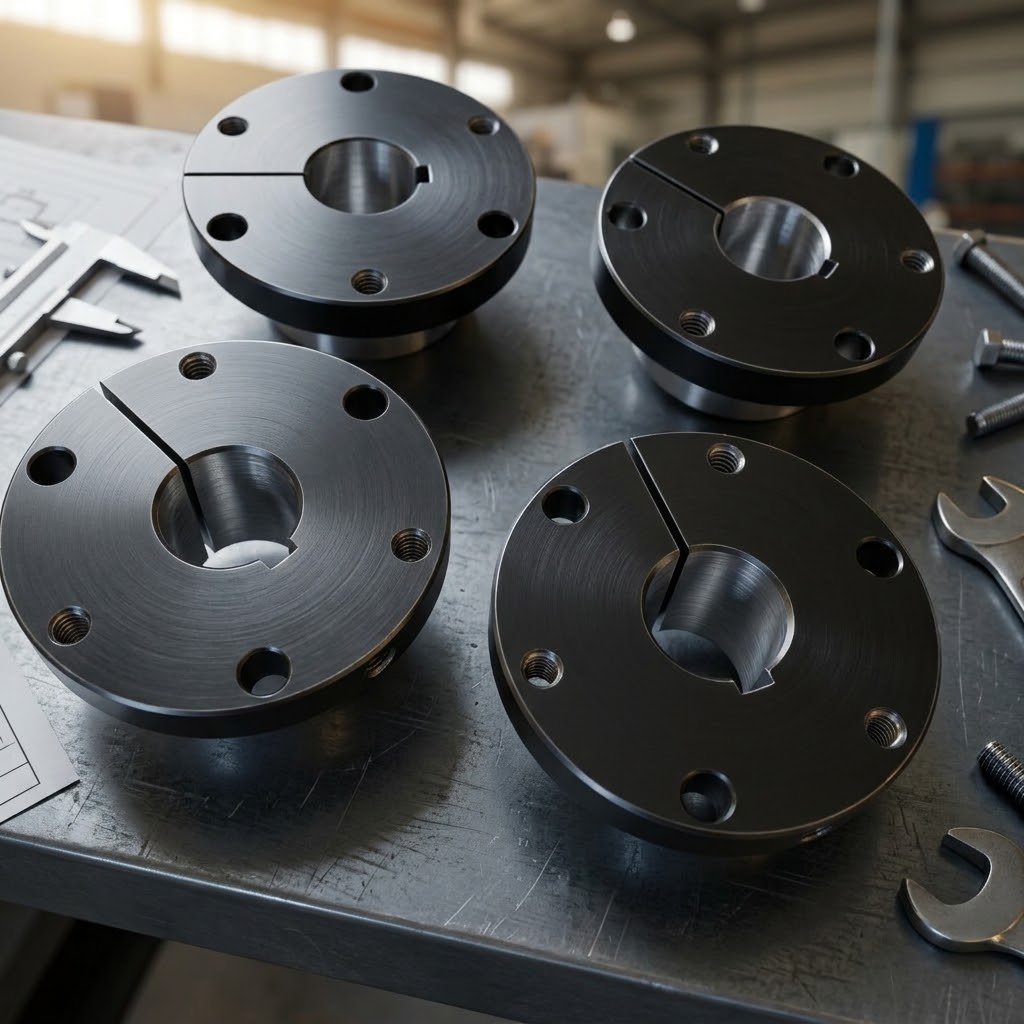
Precision CNC lathe machining custom brass and steel pipe fittings in Zhejiang factory

Material Selection for Custom CNC Pipe Fittings

Choosing the correct raw material requires balancing mechanical strength, corrosion risk, machinability, and budget. Because we machine directly from extruded or drawn bar stock, chip formation and tool wear play a major role in overall production efficiency.

Quick Material Comparison Matrix for Sourcing Engineers

Material Machinability Corrosion Resistance Pressure Rating Primary Surface Finish
Free-Cutting Brass Excellent (100%) High (Freshwater/Oil) Medium Natural / Nickel Plated
Carbon Steel Good Low (Requires Plating) High to Very High Clear/Yellow Zinc Plating
Stainless Steel (304/316) Fair Superior (Acid/Marine) High Passivated / Electropolished

Brass and Copper Alloys

Brass remains one of the most widely specified materials for low-to-medium pressure fluid handling. Free-cutting brass grades offer exceptional machinability ratings, allowing high spindle speeds and tight dimensional repeatability on multi-axis CNC turning centers.
  • Common Applications: Hose barb adapters, pneumatic line connectors, coolant lines, fuel system fittings.
  • Key Advantages: Excellent natural corrosion resistance against water and oil, rapid machining cycle times, clean thread finish without burr buildup.
  • Considerations: Lower tensile strength than carbon or stainless steel; not suitable for extreme pressure lines or high-temperature steam applications without careful wall thickness design.

Carbon Steel

For high-pressure hydraulic lines and structural fluid connections, carbon steel provides high tensile and yield strength at a competitive material cost. Explore our custom capabilities in carbon steel fittings for heavy-duty setups.
  • Common Applications: Hydraulic bulkhead fittings, heavy-duty threaded plugs, high-pressure hose adapters.
  • Key Advantages: High mechanical strength, excellent resistance to pressure spikes and mechanical vibration.
  • Considerations: Carbon steel requires surface plating to prevent rust. Common post-machining surface treatments include electro-galvanizing (clear or yellow zinc plating) and trivalent chromium passivations. Specify your required salt spray test duration on the drawing to ensure proper plating thickness.

Stainless Steel

In harsh chemical environments, marine settings, or food processing lines, stainless steel is the preferred choice for a custom pipe fittings manufacturer handling critical applications.
  • Common Applications: Chemical processing fittings, marine bulkhead connectors, high-temperature fluid lines.
  • Key Advantages: Superior resistance to pitting, oxidation, and chemical degradation without requiring additional plating.
  • Considerations: Stainless steel work-hardens quickly during machining, resulting in longer cycle times and higher tool wear compared to brass or carbon steel. To manage costs, ensure your draft drawing specifies reasonable tolerances rather than excessively tight figures where standard machining tolerances suffice.
Understanding Thread Standards and Machining Considerations

A precision-machined fitting body is only as reliable as its thread geometry. Mating thread types determine whether a joint seals on the threads themselves, via a mechanical taper, or using a secondary sealing component such as an O-ring or bonded washer.

Tapered Threads: NPT vs. BSPT

Tapered pipe threads achieve a seal by wedging the male and female thread flanks together as the joint is tightened. Thread sealant or PTFE tape is typically applied to fill micro-gaps along the thread crests and roots.
  • NPT (National Pipe Taper): Standard in North America. Features a 60° thread angle with flat crests and roots. Taper rate is 1:16.
  • BSPT (British Standard Pipe Taper): Widely used in Europe, Asia, and Commonwealth markets. Features a 55° thread angle with rounded crests and roots. Also has a 1:16 taper rate.
💡 Engineering Tip: Because NPT and BSPT share similar taper angles, they can sometimes start hand-threading together, but their differing thread profile angles (60° vs. 55°) will cause binding or leakage under pressure. Always verify the destination market and mating port specifications on your design drawing.

Parallel Threads: BSPP and Metric

Parallel (straight) threads do not seal on the thread flanks. Instead, they serve as a mechanical fastener to pull two sealing faces together against a gasket, O-ring, or metal washer.
  • BSPP (British Standard Pipe Parallel / G-Thread): Uses a 55° thread profile. Often features a sealing chamfer or spot-face on the hex body to accommodate an elastomeric seal.
  • Metric Threads (ISO): Specified by outer diameter and pitch (e.g., M18x1.5). Common in modern automotive, industrial machinery, and European hydraulic equipment. Sealing is typically accomplished via an O-ring boss or captive seal groove machined into the fitting shoulder.
When you partner with a custom pipe fittings manufacturer, thread callouts should explicitly state the pitch, flank angle, and reference standard (e.g., ANSI/ASME B1.20.1 for NPT or ISO 7-1 for BSPT) so machinists can select the correct thread-chasing tools and thread plug gages during setup.

Design for Manufacturability (DFM) Tips for Custom Fittings

Optimizing your fitting geometry for CNC turning centers helps reduce unit costs and lead times while keeping production smooth:
  • Standardize Hex Sizes: Design fitting bodies around standard bar stock hex sizes whenever possible. This eliminates the need to mill custom hex flats on round bar stock.
  • Include Thread Relief Grooves: Provide adequate undercut or thread relief space between the last full thread and an adjacent shoulder to allow smooth tool run-out during CNC thread turning.
  • Chamfer Lead-Ins: Specify a 45° chamfer on the leading thread edge. This protects the first thread from damage during shipping and helps operators align fittings during manual assembly.

How Hongqian Handles Your Custom CNC Orders

As a dedicated OEM/ODM pipe fittings manufacturer operating in Zhejiang, we do not stock off-the-shelf trading items. Every order is produced custom from raw material bar stock according to your provided CAD models and 2D engineering drawings. Learn more about our complete OEM/ODM machining process or read our latest custom machining engineering insights.
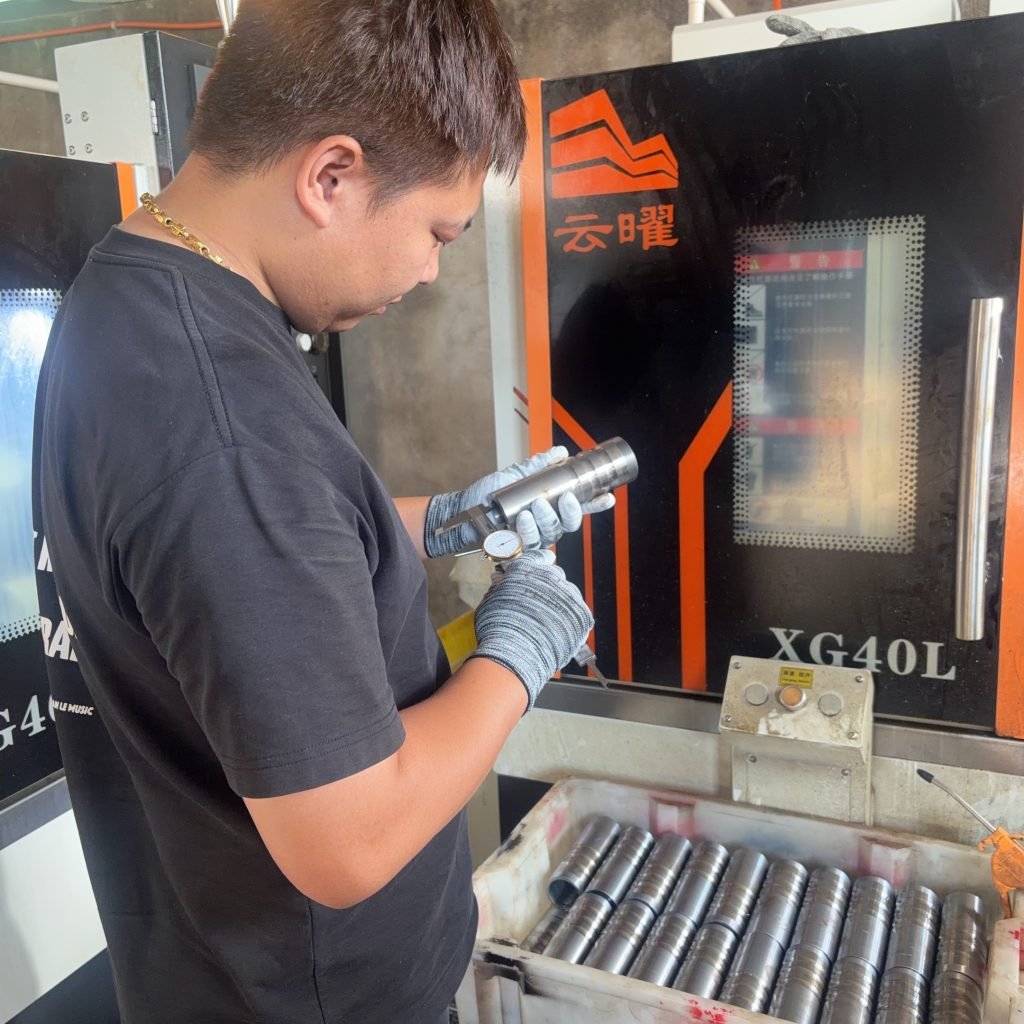
Our standard production baseline for custom components typically starts around a minimum order quantity (MOQ) of 2,000 pieces, depending on part size and material grade. Initial sample production usually requires around 10 working days for tool setup, first-article machining, and dimensional inspection using calibrated thread gages and optical comparators.

Frequently Asked Questions

Q: Do you sell standard off-the-shelf pipe fittings from a catalog?
A: No. We operate strictly as an OEM/ODM CNC machining factory. We produce custom pipe fittings, hose barb adapters, bulkhead connectors, and threaded plugs built exclusively to customer drawings and specifications.
Q: What information is required to get an accurate price quote?
A: To provide a detailed quote, please send a 2D drawing (PDF with dimensions and thread specs) or 3D CAD file (STEP/IGES), required raw material grade, surface finish/plating requirements, and estimated order quantity.
Q: Can you machine custom threads that differ from standard NPT or BSP?
A: Yes. Because we machine components on multi-axis CNC lathes using programmed thread cycles, we can cut custom pitch, non-standard metric threads, or specialized modified threads. Specific gage requirements should be confirmed on your drawing or RFQ.
Q: What is your typical lead time for custom fitting samples?
A: For custom CNC machined fittings requiring standard raw material bar stock, sample lead times are typically around 10 working days, subject to specific drawing complexity and post-machining surface treatment requirements.
Q: How do you verify thread accuracy on custom orders?
A: We inspect threads during setup and throughout production runs using calibrated Go / No-Go thread plug and ring gages corresponding strictly to the specified thread standard (NPT, BSPT, BSPP, or Metric) on your drawing.

Ready to Start Your Custom CNC Machining Project?

If you are developing a custom hose adapter, hydraulic bulkhead connector, or specialized threaded plug, send your engineering specifications directly to our shop floor team. We review every design for manufacturability to deliver reliable parts at competitive factory direct prices.
Please submit your inquiry with:
  • 2D or 3D drawing (PDF, STEP, or IGES)
  • Material grade (e.g., Brass C36000, Carbon Steel, SS304/316)
  • Thread specification & tolerance callouts
  • Surface finish / plating requirements (e.g., Yellow Zinc, Passivation, Plain)
  • Target order quantity
FAQ

Frequently asked questions

01Do you sell standard off-the-shelf pipe fittings from a catalog?

No. We operate strictly as an OEM/ODM CNC machining factory. We produce custom pipe fittings, hose barb adapters, bulkhead connectors, and threaded plugs built exclusively to customer drawings and specifications.

02What information is required to get an accurate price quote?

To provide a detailed quote, please send a 2D drawing (PDF with dimensions and thread specs) or 3D CAD file (STEP/IGES), required raw material grade, surface finish/plating requirements, and estimated order quantity.

03Can you machine custom threads that differ from standard NPT or BSP?

Yes. Because we machine components on multi-axis CNC lathes using programmed thread cycles, we can cut custom pitch, non-standard metric threads, or specialized modified threads. Specific gage requirements should be confirmed on your drawing or RFQ.

04What is your typical lead time for custom fitting samples?

For custom CNC machined fittings requiring standard raw material bar stock, sample lead times are typically around 10 working days, subject to specific drawing complexity and post-machining surface treatment requirements.

05How do you verify thread accuracy on custom orders?

We inspect threads during setup and throughout production runs using calibrated Go / No-Go thread plug and ring gages corresponding strictly to the specified thread standard (NPT, BSPT, BSPP, or Metric) on your drawing.

Quick inquiry

Send an inquiry to our team

Tell us material, thread, quantity, and requirements. After submit, email drawings to info@sspipefitting.com if needed.

Article

Selecting Materials and Thread Standards with Your Custom Pipe Fittings Manufacturer