
This article is built around a real RFQ the factory received recently from a plumbing and HVAC buyer. The buyer asked for a quotation against an attached drawing, then listed twelve items under Requested Information. That list is already a supplier audit: each item separates a claim from a record. A cnc turning parts supplier answering with adjectives will fail it; one answering with machine lists, certificate numbers and line-item data will not. The twelve questions are the framework: why each is asked, what a verifiable answer contains, which reply stops it.
1. Why an RFQ questionnaire is a better audit than a brochure
A brochure describes intent; a questionnaire demands evidence tied to one drawing and one annual volume. Machine types, certificate scope, inspection instruments, MOQ and Incoterms in one document make every bidder answer the same fields — the precondition for comparing unit prices.
DFM questions during quoting — an undefined thread relief, a radius that cannot be held — predict behaviour when a drawing changes mid-run. A cnc turning parts supplier returning the drawing unmarked is not necessarily wrong; one returning three specific questions has shown where its process control sits.
The twelve questions, as received
- Lathe counts and types.
- Maximum bar diameter.
- Monthly capacity.
- AISI 304 / SUS304 experience.
- EN 10204 3.1 availability.
- Material source and suppliers.
- Bar turning, BSP/GAS/NPT/metric threads, drilling, knurling, secondary operations.
- Quality certifications.
- Inspection equipment, dimensional inspection, leak and functional testing.
- MOQ, annual-volume price, tooling, sample cost, lead times, Incoterms.
- Company name, year, employees.
- Plumbing/HVAC customers and export markets.
2. Production capacity: machine count is a screening input, not proof
Q1. Machine count and type
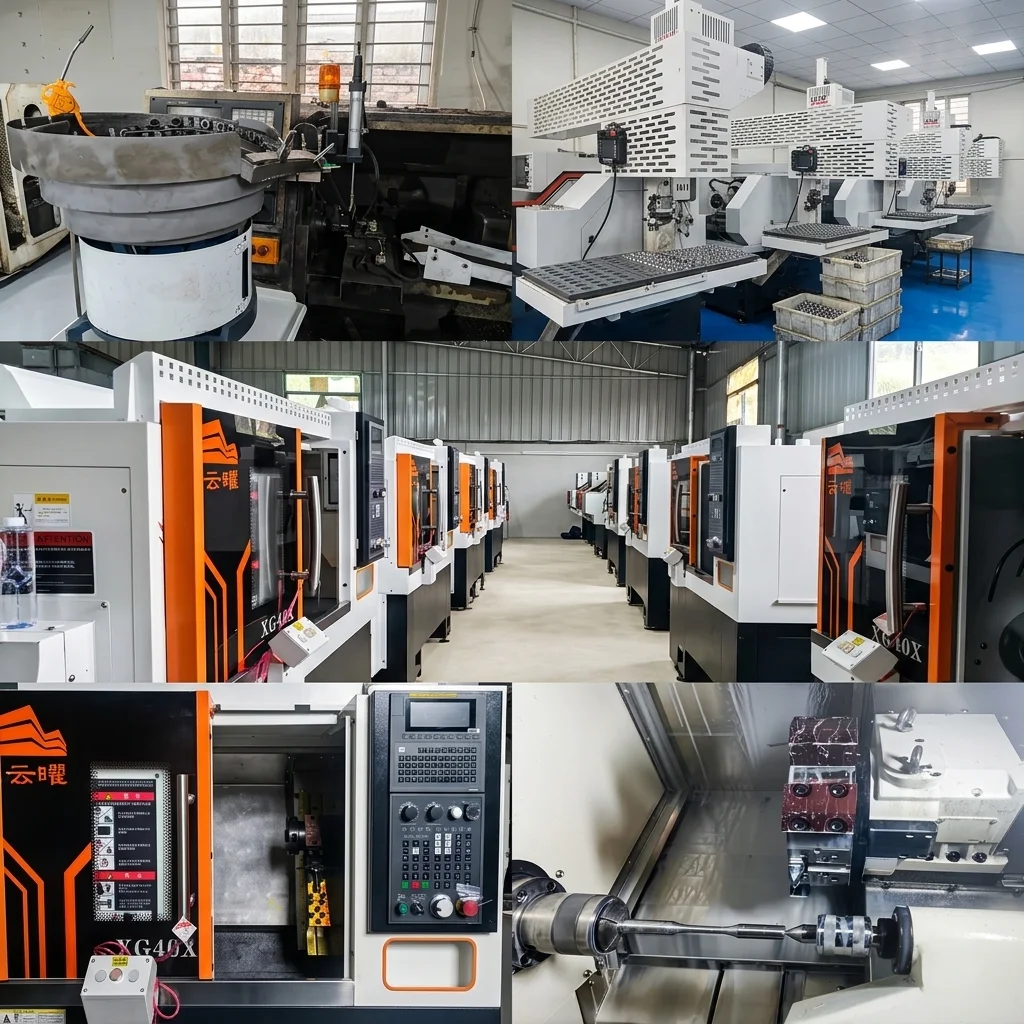
Why asked: is the route plausible at this volume? Verifiable: a machine list with make, model, envelope, bar-feed or chuck, free units, Swiss-type or standard turning, utilisation, and tolerance held across a run, not one machine’s catalogue accuracy. For a cnc turning parts supplier, a count is a filter, not proof. Red flag: a bare total, or a blanket one-site claim.
Q2. Maximum bar diameter
Why asked: bar-through capacity drives cycle time, scrap and second setups. Verifiable: bar capacity stated separately from maximum turning or swing diameter, with the collet range. Red flag: one figure for both. No figure for this field is quoted here; it must come from a machine list.
Q3. Monthly production capacity
Why asked: can annual volume be absorbed? Verifiable: a figure qualified by part type, plus available hours and loading. Red flag: an unqualified maximum contradicting the count in Q1.
3. Material experience and EN 10204 3.1 traceability
Q4. AISI 304 / SUS304 experience
Why asked: 304 work-hardens and holds heat; a process tuned to 303 will not quote the same cycle or scrap. Verifiable: grades actually run, tooling used for 304, sample parts in that grade. Red flag: “we machine all stainless steels”.
Q5. EN 10204 3.1 certificates
Why asked: a 3.1 certificate ties a lot to a heat and test results — the traceability baseline for plumbing parts. Verifiable: issuing mill named, availability for applicable grades, a specimen matching the lot’s heat number. FAI reports, dimensional certificates and material traceability are documents to request, not assume. Red flag: “on request” with no issuer, or a generic conformity statement.
Q6. Material source and suppliers
Why asked: it fixes accountability for a wrong lot. Verifiable: named mills or stockists, purchased grade and condition, incoming check per lot. Red flag: refusal to name the source, or a source changing between sample and production.
4. Machining capability: bar turning, BSP/GAS/NPT/metric threads, cross drilling, knurling, secondary operations
Q7. The operations list
Why asked: every drawing feature must map to a station. Verifiable: an itemized sheet — bar turning; each thread standard with its gauge (BSP, GAS, NPT and metric forms differ); axial and cross drilling with hole position relative to the turned axis; knurling; each secondary step listed separately — plus machine, workholding and the extra setup for cross drilling. Itemizing secondary operations makes quote scope comparable. Red flag: “full capability”, a list omitting cross drilling, or no statement of how threads are checked. Ask by name about burrs, out-of-round, chatter and threads failing go/no-go gauges.
5. Quality assurance questions for a cnc turning parts supplier: certificate scope, instruments, leak testing
Q8. Quality certifications
Why asked: a certificate only helps if its scope covers the bought process and the legal entity on the quote. Verifiable: number, registrar, scope wording, expiry and registered name, then a check of that number with the registrar. Ask the supplier to show the certificate and verify its scope with the registrar; request calibration records and ask whether statistical process control covers critical dimensions, but do not assume they are issued. Red flag: a logo with no number, a trading scope, or a different company name.
Q9. Inspection equipment, dimensional inspection, leak and functional testing
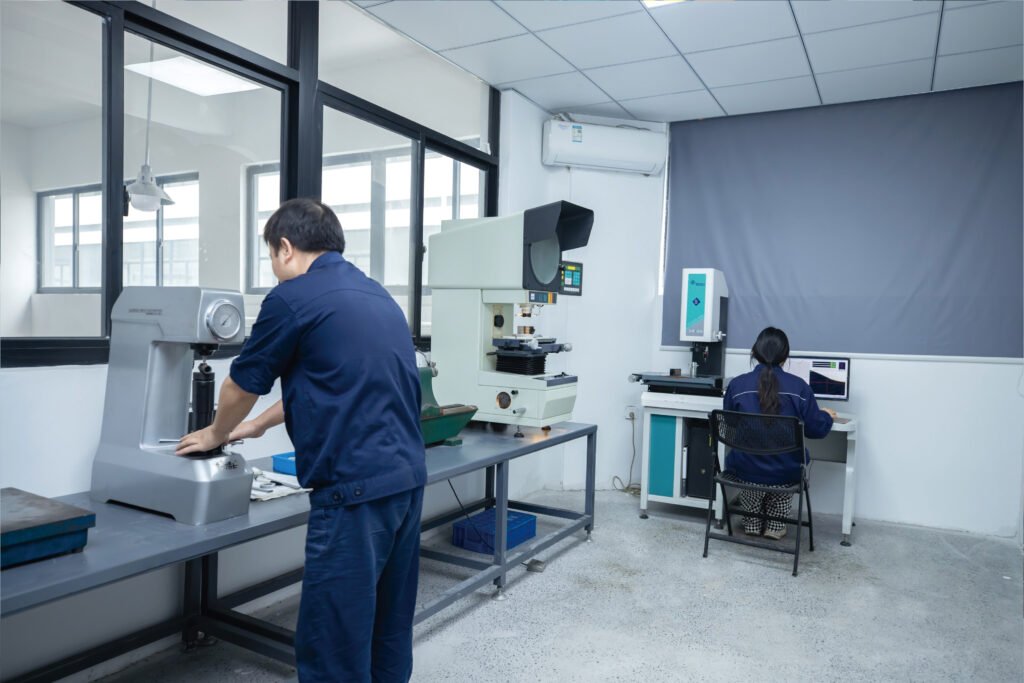
Why asked: inspection method must match the specified feature; a diameter, a thread form and a seal are not measured alike. Verifiable: a feature-by-feature matrix of characteristic, instrument, sampling plan and record. Ask which instrument measures each critical feature and who holds its calibration record; ask for a first article inspection report with defined content, and for PPAP or SPC only if required. For a part carrying fluid or gas, ask whether leak and functional testing are done on site or sent out, at what pressure and acceptance criterion. Red flag: “Normal” in the inspection-equipment field, or silence on leak testing.
6. Commercial terms: MOQ, annual-volume pricing, tooling, lead times, Incoterms
Q10. The commercial block
Why asked: a piece price means nothing until its scope is fixed. Verifiable: a line-item quotation — MOQ, unit price at each annual-volume band, tooling cost and ownership, sample cost, sample lead time, mass production lead time, packaging, Incoterm with a named port. Normalize quote scope before comparing unit prices; total cost, not unit price, is the comparison. Agree the prototype-to-production transfer in writing: drawing revision, tooling, inspection plan, first-article sign-off. Request an NDA, a line-item quote and a third-party audit. A cnc turning parts supplier quoting one all-inclusive piece price has not answered Q10. Red flag: no tooling, sample or Incoterm line, or a sample lead time with no production lead time.
 7. Company facts: legal entity, headcount, industry customers, export markets
Q11. Legal name, year established, employees
Why asked: the buyer is fixing the contracting entity. Verifiable: registered name, establishment year, headcount, and a registration record matching the quotation and bank account. Verify the legal entity against its registration; a quote misspelling its own company name is a document-control problem first. Red flag: different names on quote, certificate and invoice.
Q12. Main plumbing/HVAC customers and export markets
Why asked: sector references show whether the bidder has run these thread standards and leak-test expectations before. Verifiable: named customers — or a plain statement that there are none — export markets actually served, a documentation pack and permission to contact any claimed reference. Red flag: an invented customer list, or a case study with no part number. An honest “no named customers in this sector yet” is more useful: it puts the burden on a test batch of five to ten pieces and the first article.
8. Red flags in a supplier’s reply
These replies should pause an evaluation of a cnc turning parts supplier: each is a point where a record was requested and a description came back.
- A machine count with no make, model, envelope or free hours, and no separation of bar capacity from turning diameter.
- “Certificates available” with no number, registrar, scope or legal entity.
- “Normal” in the inspection-equipment field, with no feature-to-instrument matrix.
- Silence on leak and functional testing when the part carries fluid or gas.
- One all-inclusive piece price with no tooling, sample, packaging, Incoterm or volume lines.
- A blanket assurance that nothing leaves the site, with no disclosed, approved outside route for heat treatment or plating.
- An unnamed material source, or a legal entity on the quote not matching the registration.
- A copy-paste capability list with no DFM question about the attached drawing.
None proves a bad part; each removes one thing the buyer could verify.
9. How we answer this questionnaire as a cnc turning parts supplier
Declarative data only; unlisted fields should be requested and verified.
- Legal name: Yuhuan Hongqian Machinery Co., Ltd. Established 2016; 25 employees; 75 CNC lathes.
- Grades machined: 201, 303, 304, 316, 316L. EN 10204 3.1 certificates are available for applicable materials.
- Threads: BSP, GAS, NPT and metric.
- CNC turning tolerance: ±0.01 mm. This is a capability figure, not a blanket tolerance for every feature on the part. Surface finish: Ra 0.8 µm.
- Zinc plating thickness: 5–25 µm, a range, not a guaranteed 25 µm. Neutral salt spray: 240 h, with the acceptance endpoint (white rust or red rust) and the test standard still to be agreed.
- Sample lead time: 10–15 days.
Machining and threading are done in our own workshop. Quench-and-temper heat treatment is subcontracted — we do not claim an in-house furnace.
Main customers in the plumbing/HVAC industry: none named at present. We have no plumbing/HVAC reference customer list or case study to offer; the drawing, the sample and the first article have to carry the qualification.
Certifications, inspection equipment, leak and functional testing, material source, monthly capacity, unit price, tooling cost, mass production lead time, Incoterms and export markets are not stated here. Ask for each one and verify it. MOQ and sample terms are answered in the FAQ below.
10. A copy-paste RFQ checklist
Paste this into the next enquiry to a cnc turning parts supplier; it holds every bidder to the same fields.
| RFQ field | Why the buyer asks | Evidence to request | Red flag |
|---|---|---|---|
| Machine count and type | Plausible route? | Machine list: make, model, envelope, free hours | Bare total |
| Maximum bar diameter | Cycle time, scrap, setups | Bar-through vs swing diameter, separately | One figure for both |
| Monthly capacity | Can volume be absorbed? | Figure by part type plus loading | Unqualified maximum |
| 304 / SUS304 | Grade drives tooling and scrap | Grades run, samples in 304 | “All stainless steels” |
| EN 10204 3.1 | Heat and lot traceability | Specimen 3.1: issuer, heat number, results | “On request”, no issuer |
| Material source | Who owns a wrong lot? | Named mills, incoming check per lot | Source not named |
| Operations and threads | Feature-to-station mapping | Itemized sheet, thread gauges, setups | “Full capability” |
| Quality certifications | Scope must cover the process | Number, registrar, scope, expiry, entity | Logo with no number |
| Inspection / dimensional | Method must match feature | Feature-to-instrument matrix, FAI, calibration records | “Normal” |
| Leak / functional testing | Part carries fluid or gas | Pressure, criterion, on-site or outside route | Silence on leak testing |
| MOQ, price, tooling, sample, lead times, Incoterms | Normalizes quote scope | Line-item quote, every term named | One all-in piece price |
| Company, customers, markets | Fixes entity and evidence | Registration record, documentation pack, reference | Vague customer list |
FAQ
What is the minimum order quantity for precision turned components?
The MOQ is 3,000 pcs. It is a single figure, not a tiered schedule. The RFQ also asks for unit price at annual volumes, tooling and sample costs, sample lead time, mass production lead time and Incoterms; those fields are not quoted in this article. Ask for them as separate lines so the piece price can be compared across bidders.
How long do samples take, and is there a sample charge?
Sample lead time is 10–15 days and the sample fee is USD 100. Mass production lead time is not stated here, so request it separately and have it written into the quotation. A sample lead time on its own does not tell you how a production lot will be scheduled; ask which tooling and which inspection plan carry over from the sample to the first production run.
Why does the article use twelve questions from a real plumbing/HVAC RFQ as its structure instead of a general selection list?
Because the questionnaire arrives tied to one drawing and one annual volume, so every field can be answered with a record rather than a description. The article takes each of the twelve items in the order asked and states why the buyer asks it, what a verifiable answer contains, and which reply is a red flag. That keeps the comparison anchored to the part, not to a brochure.
Why is a machine count treated as a screening input rather than proof of capacity?
A count tells you only whether the process route is plausible. It says nothing about the envelope of each machine, how many are free for this part, or whether the tolerance holds across a run. The article therefore asks for a machine list with make, model, envelope and loading, and for process capability evidence over a batch, before any conclusion is drawn.
Why does the article tell a buyer to ask for bar diameter and turning diameter as two separate figures?
Bar-through capacity decides what can be fed continuously, which sets cycle time, scrap and whether a second setup is needed. Maximum turning or swing diameter is a different envelope and is often the larger number. A single figure offered in answer to both questions is a red flag in this article, which is why it quotes no bar-capacity figure and sends the buyer back to the machine list.
Why is a disclosed outside heat-treatment step presented as more credible than a blanket claim that everything is done on site?
Section 9 states plainly that machining and threading are done on site, while quench-and-temper heat treatment is sent to an outside processor, and that no furnace is claimed. A named outside route can be audited, quoted and held to a specification. A blanket assurance that nothing leaves the site cannot be checked against any record, and it hides the step most likely to change hardness on a turned part.
Why are ISO 9001 / IATF 16949, inspection instruments and leak testing discussed only as questions the buyer should ask?
Because the material behind this article does not state any certification, any inspection instrument, or any leak and functional testing capability. The framing is deliberate: readers are told to ask the supplier to show the certificate and verify its scope with the registrar, to ask which instrument measures each critical feature, and to ask whether leak testing is done on site or sent out. Nothing is asserted as available.
Frequently asked questions
01What is the minimum order quantity for precision turned components?
The MOQ is 3,000 pcs. It is a single figure, not a tiered schedule. The RFQ also asks for unit price at annual volumes, tooling and sample costs, sample lead time, mass production lead time and Incoterms; those fields are not quoted in this article. Ask for them as separate lines so the piece price can be compared across bidders.
02How long do samples take, and is there a sample charge?
Sample lead time is 10–15 days and the sample fee depend on the drawing. Mass production lead time is not stated here, so request it separately and have it written into the quotation. A sample lead time on its own does not tell you how a production lot will be scheduled; ask which tooling and which inspection plan carry over from the sample to the first production run.
03Why does the article use twelve questions from a real plumbing/HVAC RFQ as its structure instead of a general selection list?
Because the questionnaire arrives tied to one drawing and one annual volume, so every field can be answered with a record rather than a description. The article takes each of the twelve items in the order asked and states why the buyer asks it, what a verifiable answer contains, and which reply is a red flag. That keeps the comparison anchored to the part, not to a brochure.
04Why is a machine count treated as a screening input rather than proof of capacity?
A count tells you only whether the process route is plausible. It says nothing about the envelope of each machine, how many are free for this part, or whether the tolerance holds across a run. The article therefore asks for a machine list with make, model, envelope and loading, and for process capability evidence over a batch, before any conclusion is drawn.
05Why does the article tell a buyer to ask for bar diameter and turning diameter as two separate figures?
Bar-through capacity decides what can be fed continuously, which sets cycle time, scrap and whether a second setup is needed. Maximum turning or swing diameter is a different envelope and is often the larger number. A single figure offered in answer to both questions is a red flag in this article, which is why it quotes no bar-capacity figure and sends the buyer back to the machine list.
06Why is a disclosed outside heat-treatment step presented as more credible than a blanket claim that everything is done on site?
Section 9 states plainly that machining and threading are done on site, while quench-and-temper heat treatment is sent to an outside processor, and that no furnace is claimed. A named outside route can be audited, quoted and held to a specification. A blanket assurance that nothing leaves the site cannot be checked against any record, and it hides the step most likely to change hardness on a turned part.
07Why are ISO 9001 / IATF 16949, inspection instruments and leak testing discussed only as questions the buyer should ask?
Because the material behind this article does not state any certification, any inspection instrument, or any leak and functional testing capability. The framing is deliberate: readers are told to ask the supplier to show the certificate and verify its scope with the registrar, to ask which instrument measures each critical feature, and to ask whether leak testing is done on site or sent out. Nothing is asserted as available.