
Geometric Configurations of 90 Degree Elbow Pipe Fittings
Choosing the right 90 degree elbow pipe fitting depends heavily on the specific piping application. The two primary geometric configurations are Long Radius (LR) and Short Radius (SR) elbows.
Long Radius (LR) Elbows (R = 1.5D)
These elbows feature a curvature radius equal to 1.5 times the pipe diameter. This design provides a smoother bend, minimizing flow resistance and pressure drop. LR elbows are ideal for systems where maintaining fluid velocity and reducing turbulence are critical, such as high-pressure or high-flow applications.
Short Radius (SR) Elbows (R = 1.0D)
With a radius equal to the pipe diameter, SR elbows are more compact, making them suitable for tight spaces and complex piping layouts. However, they cause higher pressure drops and flow turbulence due to their sharper bend. SR elbows are often used where space constraints outweigh the need for flow optimization.
Performance Comparison
| Feature | Long Radius (LR) | Short Radius (SR) |
|---|---|---|
| Curvature | Gentle, smooth | Sharp, tight |
| Flow Resistance | Lower | Higher |
| Pressure Drop | Less | More |
| Space Efficiency | Less compact | Very compact |
Understanding these differences helps engineers select the appropriate elbow type, balancing flow efficiency with spatial constraints.
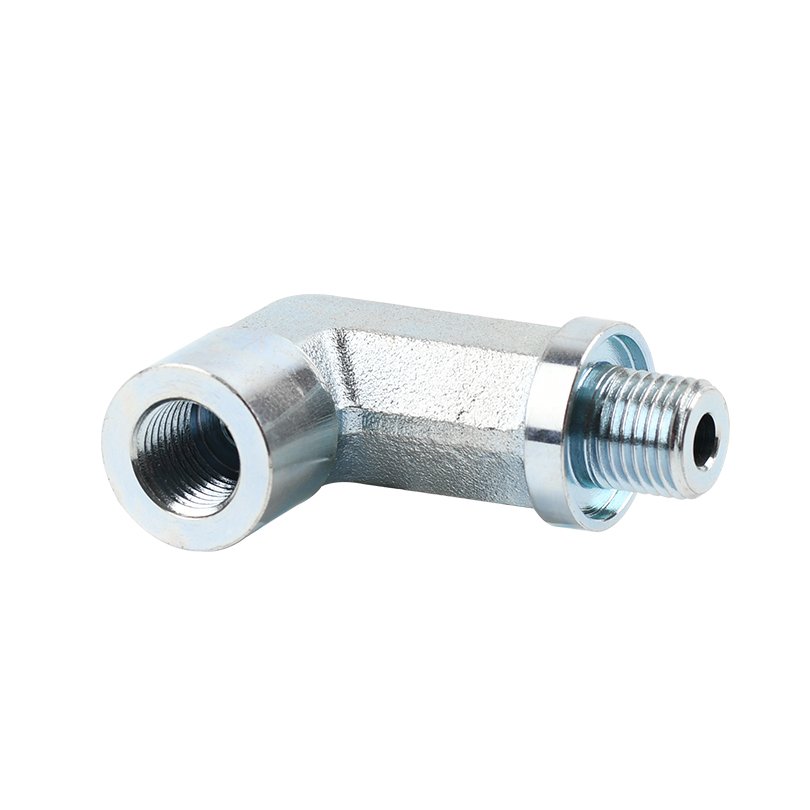
Connection Types and Manufacturing Classifications for 90 Degree Elbow Pipe Fittings
Choosing the right connection type is critical for ensuring durability and performance in your piping system. Here’s a quick overview of the most common types used in 90-degree elbow pipe fittings:
Butt Weld (BW) 90° Elbows (ASME B16.9)
-
- Construction: Seamless or welded
- Design: Bevel preparation for welding
- Use case: High-pressure, high-temperature systems
- Advantages: Strong, leak-proof joints, ideal for heavy-duty applications
- Notes: Seamless elbows are often preferred for critical services due to their uniform wall thickness and strength
Socket Weld (SW) 90° Elbows (ASME B16.11)
-
- Design: Small-bore, socket weld connection
- Features: Vibration resistance, easier to install in tight spaces
- Expansion Gap: Typically 1/16-inch to accommodate thermal expansion
- Use case: Small-diameter piping, low to medium pressure
- Advantages: Good for vibration-prone environments, quick to assemble
Threaded (NPT/BSPT) 90° Elbows
-
- Connection: Male-to-female threading
- Use case: Low-pressure systems, temporary setups
- Limitations: Not suitable for high-pressure or high-temperature applications
- Notes: No hot-work zones; easy to install and remove, but less durable over time
| Connection Type | Construction | Pressure Rating | Typical Use | Pros | Cons |
|---|---|---|---|---|---|
| Butt Weld (BW) | Seamless/Welded | High | Heavy-duty, high-pressure | Strong, leak-proof | Requires welding skills |
| Socket Weld (SW) | Welded | Medium | Small-bore, vibration resistance | Easy to install | Limited size range |
| Threaded (NPT/BSPT) | Threaded | Low | Low-pressure, temporary | Simple, quick | Less durable, limited pressure |
This variety allows you to select the best connection type based on your system’s pressure, temperature, and installation constraints. Proper selection ensures safety, longevity, and ease of maintenance.
Material Grades and Environmental Compatibility for 90 Degree Elbow Pipe Fittings
Choosing the right material grade for 90 degree elbow pipe fittings is crucial for ensuring durability and performance in your piping system.
Carbon Steel (ASTM A234 WPB, WPC, A420 WPL6) is a popular choice for high-strength applications and low-temperature service. It offers reliable toughness and is cost-effective for general use.
Stainless Steel (ASTM A403 WP304/304L, WP316/316L) provides excellent corrosion resistance, making it ideal for sanitary and corrosive environments. It’s common in food processing, chemical plants, and water systems.
High-Yield and Alloy Steels (ASTM A234 WP11, WP22, WP91, Duplex) are designed for demanding conditions like sour service or high-creep environments. These materials resist corrosion and mechanical stress under extreme conditions.
Material Selection Checklist:
– Fluid corrosivity: Is the fluid corrosive or aggressive? Choose stainless steel or duplex for high resistance.
– Thermal limits: Will the fittings operate at high or low temperatures? Match material grade to thermal conditions.
– Mechanical stress: Are there high pressure or mechanical loads? Opt for high-yield or alloy steels for added strength.
Matching the right material grade to your specific environment ensures the longevity and safety of your 90 degree elbow pipe fittings, especially in high-pressure piping systems.
Hydraulic Considerations: Pressure Drop & Fluid Dynamics in 90 Degree Elbow Pipe Fittings
Flow resistance and pressure loss are critical factors when selecting 90-degree elbow pipe fittings. The equivalent length (L/D) calculation helps quantify how much a fitting adds to overall system pressure drop. Typically, a long radius (LR) elbow has a lower K-factor, meaning less flow resistance, while a short radius (SR) elbow increases pressure drop due to tighter curvature.
| Elbow Type | K-factor | Flow Resistance | Pressure Drop |
|---|---|---|---|
| Long Radius (LR) | Lower | Less | Lower |
| Short Radius (SR) | Higher | More | Higher |
Erosion & Corrosion Risks at the Extrados
The outer curve of a 90-degree elbow, known as the extrados, faces higher fluid velocities, increasing wall thinning risks. Erosion and corrosion can weaken the pipe, leading to leaks or failures. Proper material choice and regular inspection are essential for high-flow or corrosive fluids.
Cavitation & Water Hammer Mitigation
Cavitation occurs when vapor bubbles form and collapse, damaging the pipe wall. Water hammer—sudden pressure surges—can also cause pipe damage and joint failure. To prevent these issues:
-
- Maintain proper spacing between elbows and valves
- Use straight runs before and after elbows
- Follow spacing rules to reduce turbulence and pressure spikes
Implementing these practices ensures reliable operation and extends the lifespan of your piping system.
Quality Control, NDT Inspection, and Material Certification Standards for 90 Degree Elbow Pipe Fittings
Ensuring quality in 90 degree elbow pipe fittings is critical for safety and performance. We rely on strict Non-Destructive Testing (NDT) methods, including radiographic, ultrasonic, magnetic particle, and dye penetrant tests. These techniques verify the integrity of the fittings without damaging them, catching flaws like cracks or porosity early.
Hydrostatic testing is also standard. It confirms the pressure-holding capability of the fittings under simulated operating conditions. Additionally, Positive Material Identification (PMI) ensures the alloy composition matches specifications, verifying the material’s strength and corrosion resistance.
We emphasize proper documentation to guarantee traceability and compliance. This includes EN 10204 Type 3.1/3.2 Material Test Reports (MTRs), which detail the material’s chemical and mechanical properties. These reports are essential for quality assurance, especially in high-pressure piping systems, where failure is not an option.
Procurement Checklist for 90 Degree Elbow Pipe Fittings in RFQ
When specifying 90 degree elbow pipe fittings in an RFQ, clarity on key parameters is crucial to avoid costly mistakes. Here’s what you need to focus on:
Essential Parameters
| Parameter | Description |
|---|---|
| NPS (Nominal Pipe Size) | Match with your pipe’s NPS for proper fit |
| Schedule | Ensure the wall thickness matches your pressure needs |
| Radius Type | Long Radius (LR) or Short Radius (SR) based on space and flow |
| End Types | Butt weld, socket weld, threaded — choose as per installation |
| Material | Select the right grade (carbon steel, stainless, alloy) |
| Surface Coating | Coatings for corrosion resistance or environmental needs |
Avoid Costly Sourcing Mistakes
-
- Schedule Mismatch: Confirm the schedule matches your piping system to prevent fitting failure.
- Corrosion Allowance: Specify coatings or material grades to handle your fluid environment.
- Test Omissions: Always include hydrostatic testing and material certifications like EN 10204 3.1/3.2 to verify quality.
Quick Tips for RFQ Success
-
- Clearly state center-to-end dimensions for accurate fitting placement.
- Double-check pressure ratings to match your system’s operating conditions.
- Avoid generic specs; be precise to prevent delays and extra costs.
By paying attention to these key details, you ensure your procurement process is smooth, cost-effective, and reliable.
Frequently Asked Questions About 90 Degree Elbow Pipe Fittings
What is the difference between a 90-degree long radius and short radius elbow?
The main difference is the radius of curvature.
– Long Radius (LR) elbows have a radius of 1.5 times the pipe diameter (R = 1.5D).
– Short Radius (SR) elbows have a radius equal to the pipe diameter (R = 1.0D).
Why it matters:
– LR elbows provide better flow with less pressure drop and are ideal for high-flow systems.
– SR elbows are more compact, fitting tighter spaces but cause slightly higher pressure losses.
How do you calculate the center-to-end dimension of a 90-degree elbow?
The center-to-end (C-to-E) dimension is critical for proper fit and installation.
– For long radius elbows, C-to-E = (1.5 × pipe diameter) + wall thickness.
– For short radius elbows, C-to-E = (1.0 × pipe diameter) + wall thickness.
Note: Always verify dimensions against standards like ASME B16.9 to ensure compatibility.
When should you choose socket weld over butt weld 90-degree elbows?
-
- Socket weld elbows are best for small-bore, low-pressure applications, where vibration resistance isn’t critical.
- They are easier to install but have lower pressure ratings and are more prone to leakage if not properly installed.
- Butt weld elbows are preferred for high-pressure, high-temperature systems, offering seamless construction and better strength.
Why is wall thinning critical at the extrados of a 90 degree pipe elbow?
The extrados is the outer curve of the elbow.
– It experiences higher stress and erosion due to fluid impingement.
– Wall thinning can lead to cracks or leaks, especially in high-pressure or corrosive environments.
– Regular inspection and proper material selection help prevent failures caused by wall thinning.
| Question | Key Point |
|---|---|
| Long radius vs. short radius | Curvature and flow efficiency |
| Center-to-end calculation | Based on diameter and wall thickness |
| Socket weld vs. butt weld | Application and pressure considerations |
| Wall thinning | Critical for durability and safety |