
If you’re working with threaded pipe fittings, understanding how threaded joints seal tapered threads like NPT and NPTF is essential for ensuring leak-proof connections. Whether you’re dealing with BSPT R/Rc or ISO taper parallel threads, knowing how to specify and interpret thread callouts can save you time and prevent costly errors. In this guide, you’ll discover the key differences, how to read thread family tables, and the best practices for specifying threads on drawings. Ready to master threaded pipe fittings? Let’s dive in!
How Threaded Joints Seal
Threaded pipe fittings rely on two primary sealing methods: taper wedge and face compression. Tapered threads, like NPT and BSPT, create a seal through a wedging action as the threads tighten, forming a tight, leak-proof connection. The taper causes the threads to compress against each other, effectively sealing the joint without additional materials. Conversely, parallel threads, such as BSPP G fittings, depend on face compression where the seal occurs at the face of the fitting rather than the threads. Proper tightening and sometimes the use of sealants or thread tape ensure a reliable seal. Choosing the right method depends on the application, pressure requirements, and type of threaded pipe fittings used. Ensuring correct installation and understanding these sealing principles are crucial for a leak-free, durable connection.
Tapered Threads
Tapered threads are essential in creating secure, leak-proof connections in threaded pipe fittings. They are designed with a slight angle that tightens as the fitting is screwed in, ensuring a tight seal without additional sealing compounds. This type of threading is common in many piping systems because it provides reliable sealing and easy assembly.
NPT and NPTF: the 60° North American System
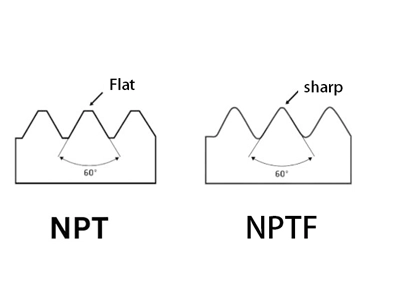
The most widely used tapered thread in the US is NPT (National Pipe Tapered). It features a 60° thread angle that creates a wedging effect when tightened, forming a seal that prevents leaks. NPTF (National Pipe Tapered Fuel), also known as dryseal, is an improved version that offers a more precise fit, often eliminating the need for thread sealant. These threads are standard for threaded pipe fittings in many industries, including plumbing and hydraulic systems. For a deeper understanding, see NPT vs BSPT vs BSPP thread standards.
BSPT R/Rc: the 55° ISO Taper
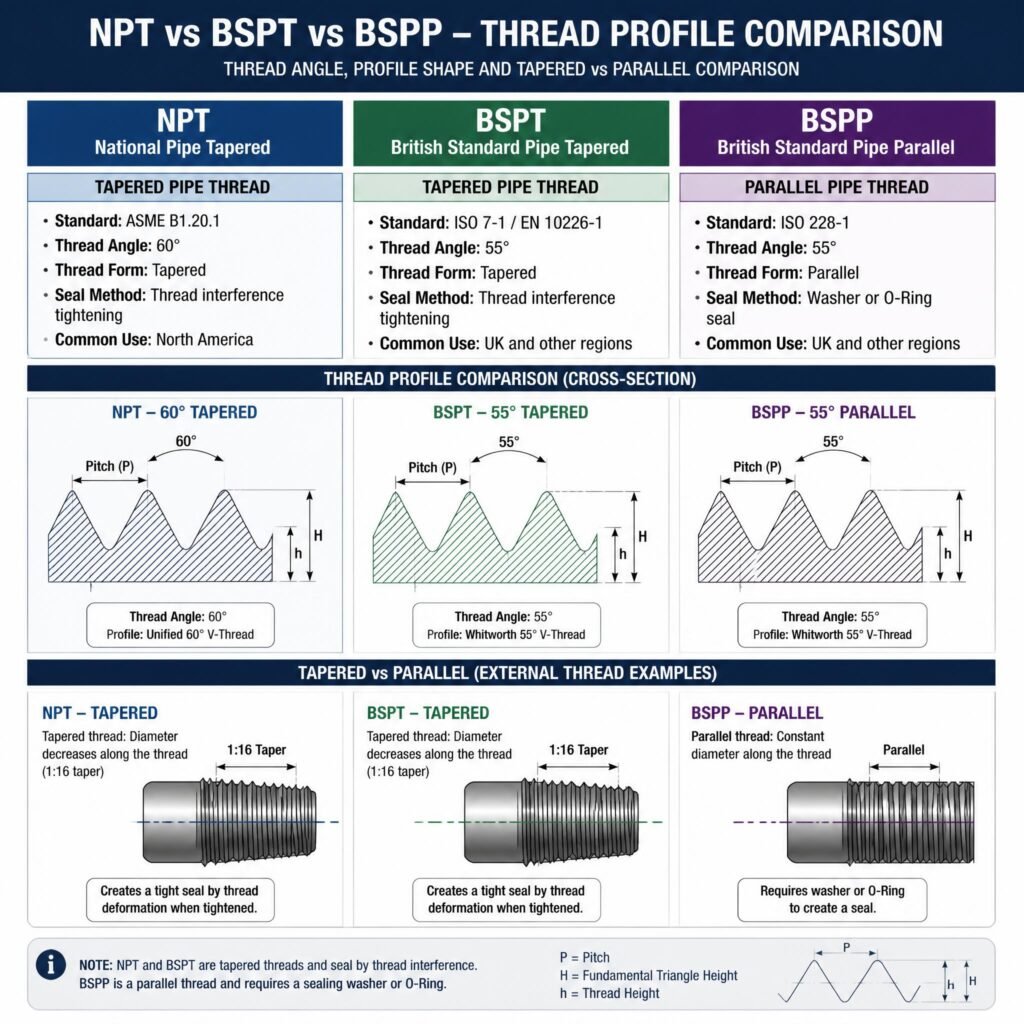
BSPT (British Standard Pipe Tapered) threads, also called R/Rc, feature a 55° thread angle, slightly different from NPT. They are commonly used in international applications, especially in Europe and Asia, but are also prevalent in the US for specific piping needs. BSPT threads provide a reliable seal when tightened properly and are often paired with BSPP (British Standard Pipe Parallel) fittings for versatile connections. These tapered BSP pipe fittings are popular in various industries, including HVAC and process piping.
Parallel Threads
Parallel threaded pipe fittings, like BSPP G, are designed with the thread only acting as a clamp. Unlike tapered threads, the seal happens at the face of the fitting rather than at the threads themselves. This means that the sealing surface is flat, providing a reliable seal when tightened properly. These fittings are popular in applications where a tight, leak-proof connection is essential, especially in systems with frequent assembly and disassembly. When specifying these fittings, it’s important to ensure the face seal is clean and free of damage for the best results. For a wide selection of BSPP G fittings and other threaded pipe fittings, you can explore our threaded fittings collection.
Thread Family Table
The thread family table is essential for selecting the right threaded pipe fittings for your project. It categorizes fittings by standard profiles, taper types, and seal methods, helping you identify the best fit for your application. Common standards include NPT and BSPT, which are widely used in the US and internationally. NPT (National Pipe Thread) features a 60° taper that creates a tight seal through wedge action, ideal for many plumbing and industrial uses. BSPT (British Standard Pipe Taper), with its 55° ISO taper, is also popular for its reliable sealing capabilities.
Parallel threads, like BSPP G, do not taper but rely on face-to-face contact for sealing, often used in high-pressure systems. The table also covers main markets such as oil and gas, plumbing, and manufacturing, ensuring you find the right threaded fittings for your specific needs. For a comprehensive selection, explore our threaded pipe fittings that match these standards and profiles.
How to Specify Threads on Drawings
When detailing threaded pipe fittings on drawings, clarity is key. Use a full callout formula to avoid confusion and ensure the correct fittings are produced. The standard callout includes the thread type, size, and thread profile, such as “1/2” NPTF” or “3/4” BSPP G.” For tapered threads like NPT or BSPT, specify the thread angle (60° for NPT, 55° for BSPT). Parallel threads, like BSPP G, are typically identified by size and thread type only, since they rely on face sealing. Properly specifying threads helps prevent mismatched fittings and leaks in your piping system. For more guidance on thread callouts, visit our threaded fittings product page.
Frequently Asked Questions
Are your threaded pipe fittings compatible with different thread standards?
Yes, threaded fittings come in various thread types, including tapered and parallel threads, to match different standards like NPT, BSPT, and BSPP G. Be sure to specify the correct thread type when ordering or designing your system. If you’re unsure about the right fit, send your drawings for review—our team can help complete the thread callouts before quoting.
How do I identify the right threaded pipe fittings for my project?
Choosing the right fittings depends on your application’s pressure, temperature, and connection type. Tapered threads like NPT and BSPT seal through wedge-shaped contact, while parallel threads such as BSPP G rely on face compression for sealing. For custom or high-precision needs, consider our CNC-machined stainless steel fittings or custom stainless steel parts.
What is the best way to specify threads on technical drawings?
Always include the full thread callout, which covers the thread type, size, and seal method. For example, a typical callout might specify “1/2″ NPT Female” or “3/4″ BSPP G Thread.” Accurate callouts ensure proper manufacturing and fitment. If your drawings need assistance with thread specifications, send them to us, and we’ll help complete the details before production.
Can I mix different thread types in my piping system?
Mixing thread types is generally not recommended unless adapters or fittings are used. Different standards like NPT and BSPP G are not directly compatible, which can lead to leaks or damage. Always match thread types and sizes to ensure a secure, leak-free connection. For high-quality adapters or fittings, visit our hex nipple and zinc-plated nuts.
Need more help with threaded fittings?
If your projects require specific threaded pipe fittings or custom solutions, contact us with your drawings. We can provide precise, reliable fittings tailored to your needs, ensuring a perfect fit and seal every time.
Incomplete thread callouts can lead to delays and miscommunication during installation. If your drawings lack the full thread specifications, send them to us—our team will review and complete the callouts before providing a quote. Accurate thread details ensure proper fit and seal, especially with popular options like BSP pipe fittings or threaded pipe fittings. Don’t risk leaks or assembly issues—reach out with your drawings today and get precise, ready-to-use specifications for your project. Inquiry now to streamline your piping installation process.