
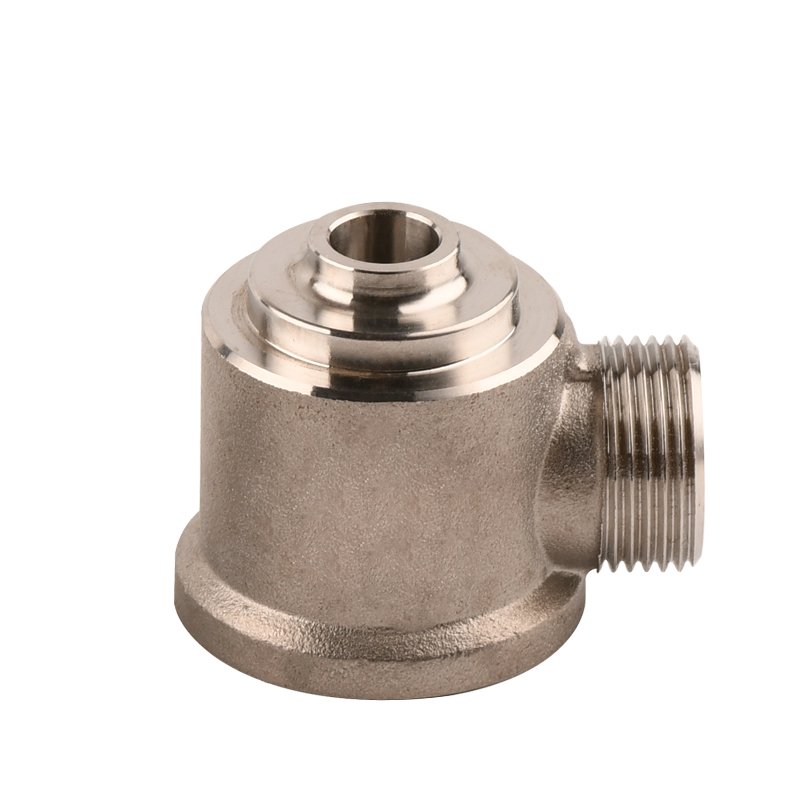
A stainless steel elbow fitting is not a carbon steel elbow made in a different material. The two are produced by different processes, and the difference is the first thing to settle before a price means anything. Carbon steel elbows of this size are usually red-punched — billet heated, forged in a die, trimmed, then machined. For 304 and 316 we do not quote that route. Stainless is made here two ways: an investment cast blank (silica sol / lost wax) finished on a CNC lathe, or machined from solid bar with no casting at all.
Which one you get decides the shape you can have, the lead time and the minimum order. Casting buys you shape — a true 90°, a street elbow with male and female ends, a reducing body — at the cost of a 40-day blank and a die. Bar buys you speed and no tooling, but only for bodies you can turn out of solid stock, and it costs more per piece once volumes climb.
Why stainless is not red-punched
Red punching works on carbon steel because the material is forgiving. Heat a billet to around 1,100–1,200 °C, drop it into a die, and the steel flows into the cavity in one blow with a scale layer that comes off in the trimming press. The die takes tens of thousands of parts.
Stainless behaves differently in every part of that sentence. Its flow stress at forging temperature is roughly double that of carbon steel, so the press has to be bigger; the window between “too cold to flow” and “too hot and the grain grows” is narrow; the oxide skin is tenacious and takes a pickling step rather than a shake; and the die wears out several times faster. On a small elbow the arithmetic ends up worse than casting and worse than machining from bar. Industry does hot-forge some stainless parts, but not this family at these quantities, and we do not offer it. If a supplier quotes you a red-punched 316 elbow, ask what the forging temperature is and what die life they expect — in most cases the honest answer is that the part is cast.
Silica sol casting: what the 40 days actually buy
Silica sol (the binder in lost-wax shell casting) is a slow process by nature, not by scheduling. Nothing in it can be compressed without buying quality problems later. The blank alone is about 40 days before a single part reaches a lathe.
| Step | What happens | Days |
|---|---|---|
| Wax patterns | Injected from an aluminium die, trimmed, gated onto a tree | 2–3 |
| Shell building | Five to seven coats of silica sol binder and stucco, each layer dried 8–12 hours in controlled humidity — this is the part nobody can rush | 6–8 |
| Dewax and firing | Autoclave removes the wax, then the shell is fired at 1,000–1,150 °C so it can take the pour | 2 |
| Pour | 304 poured near 1,550 °C, 316L a little higher; heat chemistry checked before the pour | 1–2 |
| Cut-off and pickle | Gate cut, flash ground, then pickled and passivated to remove scale and free iron from the surface | 3–5 |
| Solution anneal | 1,040–1,120 °C then water quench — see the next section, this is not optional | 2 |
| Blank inspection | Dimensional check, XRF on the heat, visual for cold shuts and shrinkage | 1–2 |
| Total, blank only | Before any machining, and running in parallel only where the steps allow | ~40 |
That is why a stainless steel elbow with a casting behind it cannot be quoted like a carbon steel one. The 40 days sit in front of the machining, not inside it, and the machining adds its own two weeks. Plan a first order at roughly 11–12 weeks from die approval.
Solution annealing: the step that decides whether it rusts
A casting is not a forging and not a bar. It cools slowly in a ceramic shell, and in that time chromium carbides precipitate at the grain boundaries, pulling chromium out of the matrix right where corrosion starts. Weld repair — and most castings get some — makes it worse by adding a heat-affected zone on top.
Solution annealing at 1,040–1,120 °C followed by a water quench puts that chromium back into solution and restores the passive layer. Skip it, and the part still gauges, still threads, still passes a dimensional report — and fails a salt spray test or an intergranular corrosion test six months later, usually at your customer rather than at the foundry. 316L’s low carbon reduces the risk but does not replace the anneal.
Ask for the heat treatment record with the batch. It is a two-page document and it is the difference between a casting and a corrosion-resistant part.
304 or 316 — and why every heat is XRF checked
| Grade | Where it is the right choice | Where it is not |
|---|---|---|
| 201 | Dry indoor hardware, decorative and low-pressure work, cost-driven consumer assemblies — castable, see the next section | Chlorides, coastal sites, potable water, pressure-retaining parts; it also goes magnetic after cold work |
| 304 / 304L | Water, food and general process lines, indoor and sheltered outdoor, non-chloride service | Chloride, coastal or de-icing exposure — pitting shows up first on the sealing face |
| 316 / 316L | Chlorides, marine, chemical and pulp service, anything that will be welded nearby | Where the budget will not carry it and the service is genuinely dry and clean |
| Other grades | 2205 duplex, 321, 310S and 17-4PH on request — each needs its own casting and heat treatment route | — |
304 and 316 look identical. The only difference that matters to the buyer is molybdenum, and molybdenum is invisible. Substituting 304 for 316 is the most common thing that happens to a stainless fitting on its way through a supply chain, and no photograph, no certificate of the wrong type and no “we always use 316” will catch it. Every heat is checked by XRF (PMI) before it is released, and the reading travels with the batch. If your incoming inspection has an XRF gun, the numbers will match.
201: it can be cast, and this is what it costs you
Yes — 201 stainless can be investment cast, and it is poured every day for hardware, hinges and low-cost fittings. So the honest answer to “can you cast 201” is yes, we can. The better question is what you are buying when you specify it, because 201 is not a cheaper 304. It is a different alloy that trades nickel for manganese, and the trade shows up in exactly the two places a fitting has to hold.
| 201 | 304 / 304L | 316 / 316L | |
|---|---|---|---|
| Nickel | 3.5–5.5 %, with 5.5–7.5 % manganese | 8–10.5 % | 10–14 % |
| Molybdenum | none | none | 2–3 % |
| Carbon, max | 0.15 % | 0.08 % / 0.03 % | 0.08 % / 0.03 % |
| Chloride resistance | Poor — pitting starts early and on the sealing face | Moderate | Good |
| After cold work | Becomes magnetic | Essentially non-magnetic | Essentially non-magnetic |
| Machining | Work-hardens fast; shorter tool life, thread finish harder to hold | Baseline | Tougher than 304, gummier chip |
On a casting, two rows of that table decide whether the part survives. Carbon at 0.15 % against 0.08 % means roughly twice the carbide-forming potential, and a casting cools slowly in its shell — so the chromium depletion at the grain boundaries is worse, and solution annealing stops being good practice and becomes the whole job. Nickel replaced by manganese means a thinner, less stable passive layer, and 201 carries no molybdenum at all. In dry indoor service you will never see the difference. In a line carrying chlorides, or on a coastal site, 201 pits on the sealing face before the body shows anything — and a pit on a sealing face is a leak, not a cosmetic defect.
Where 201 is the right answer: dry indoor hardware, decorative parts, low-pressure assemblies, consumer products sold on price. Where it is the wrong answer: anything holding water with chlorides in it, coastal or de-icing exposure, potable water systems whose specification names 304, and pressure-retaining parts where a pinhole becomes a warranty claim rather than a rework order. One more practical trap — 201 turns magnetic after cold working, so if your incoming inspection waves a magnet over the part as a quick grade check, 201 fails it, and that is a legitimate reason for rejection on the dock.
The saving is also smaller on a cast fitting than on a sheet part. On a 0.3 kg blank the die, the shells, the pour, the anneal and the machining cost the same whatever grade goes in the furnace; only the raw material line changes. At 3,000 pieces that is still real money, but it is a percentage, not a step change — and the 40 days of casting do not shorten because the alloy is cheaper.
If you do specify 201, it is verifiable. Manganese and nickel are the tell: 201 reads 5–7 % Mn and 3.5–5.5 % Ni, 304 reads under 2 % Mn and above 8 % Ni. Both numbers go on the PMI sheet with the batch, so a 201 part cannot be passed off as 304 to anyone holding an XRF gun — which is also the reason a 304 part will not be quietly swapped for 201 on the way to you.
Machining a casting: allowance, datums, threads
A cast body arrives with 1.5–3 mm of machining allowance and no reliable datum. An investment cast elbow has one more quirk: the parting line sits where the shell halves met, and the wall thickness either side of it is never perfectly symmetric. The first operation establishes a datum — usually the port face — and everything after it is measured from there. Get that wrong and the wall ends up thin on one side, which shows up as a leak under pressure rather than as a dimension out of tolerance.
Threads are always cut, never cast. A cast thread is porous at the crest, will not hold a gauge reading and will not seal. Sealing faces are turned the same way, in the same setup as the thread where the geometry allows, so that squareness between thread and seat is a machine result rather than a fixture result.
Turning runs on more than 60 CNC automatic lathes on gantry-robot loading lines, with live tooling for milling, drilling and tapping in the same setup; small parts run through vibratory bowl feeding. Secondary equipment — presses, tapping machines, grinding, laser marking, ultrasonic cleaning — sits in the same workshop, so a batch does not travel between suppliers between operations. Operators check dimensions on a fixed interval and record them during the shift; optical projector, hardness tester and roughness tester are used for the features a caliper cannot settle, and each batch ships with a material report and a dimensional inspection report.
Why the minimum is 3,000 pieces
Two costs set that number, and neither is negotiable at small quantity. The first is the wax injection die: it is cut from aluminium, tried, corrected and then stored against your part number. The second is the pour — a heat has to be filled to be economic, and a batch of shells has to fill the furnace. 3,000 pieces per size is where an investment cast stainless steel elbow stops being a sample and starts being a part; below that the die cost per piece is no longer a line on the quotation, it is the price.
From roughly 10,000 pieces per size the tooling is normally absorbed rather than invoiced. The die itself is free of charge for life: if it wears out or is damaged in production we rebuild it at our own cost, and the same part number never carries a second tooling charge however many years later the reorder comes.
Lead time, and what to send for a quote
| Stage | First order | Repeat order |
|---|---|---|
| Wax die | 10–15 days | — |
| Cast and machined sample | 15–20 days after die | — |
| Production blanks (silica sol) | ~40 days | ~40 days |
| Machining and inspection | 10–15 days | 10–15 days |
| Total from die approval | about 11–12 weeks | about 8 weeks |
Send the drawing and say four things with it: grade (304, 316 or 316L), thread standard, whether the 90° is standard or street pattern, and the first-lot quantity. If the drawing does not state a heat treatment or a PMI requirement, say whether you need one — those are the two lines that decide whether an investment cast stainless steel elbow survives its service, and they cost much less to settle before the die is cut than after.
Related: stainless steel pipe fittings · carbon steel screw plug
How do I get a quote for stainless steel elbow fitting?
Send CAD/STEP or PDF, material, thread, finish, and quantity to info@sspipefitting.com or use the inquiry form. We’ll flag fit risks before pricing when the print is clear.
Can you cast 201 stainless instead of 304?
Yes, 201 can be investment cast and we quote it. What changes is corrosion resistance: 201 carries manganese instead of most of its nickel and no molybdenum, so it pits early in chlorides, and its 0.15 % carbon makes solution annealing critical. Fine for dry indoor hardware, wrong for water lines. PMI shows 5–7 % Mn and 3.5–5.5 % Ni, so it is verifiable.
Should I take a cast elbow or one machined from bar?
Cast buys shape: a true 90°, a street pattern, a reducing body, at a 40-day blank lead time and a die. Bar buys speed: no tooling, first article in about two weeks, but only for bodies that can be turned from solid stock, and it costs more per piece at volume.
Why is the minimum 3,000 pieces, and can you run 500?
A wax die has to be cut and corrected, and a heat of steel has to be filled to be economic — below a few thousand pieces the tooling stops being a line on the quote and becomes the price. 500 pieces is possible only on the bar-stock route, without casting, at a higher unit price.
Is the thread cast or machined?
Machined, always. A cast thread is porous at the crest, will not hold a Go/No-Go reading and will not seal. Threads and sealing faces are turned in the same setup where geometry allows, so squareness is a machine result rather than a fixture result.
How long from drawing to first shipment?
Die 10–15 days, cast and machined sample 15–20 days after that, production blanks about 40 days, machining 10–15 days. First order lands at roughly 11–12 weeks from die approval; repeats run about 8 weeks.
Do you supply a material certificate and PMI?
Yes. Every heat is XRF checked before release and the reading ships with the batch, together with an EN 10204 3.1 material report and a dimensional inspection report. If your incoming inspection has an XRF gun, the manganese, nickel and molybdenum readings will match ours.
Related products
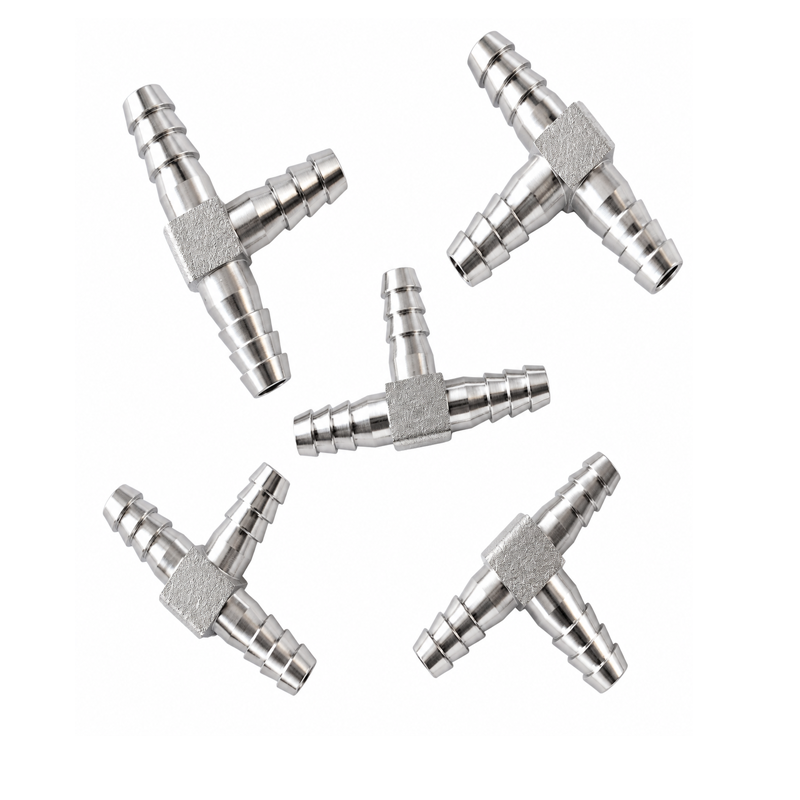
Stainless Steel Precision Turned Components
View details →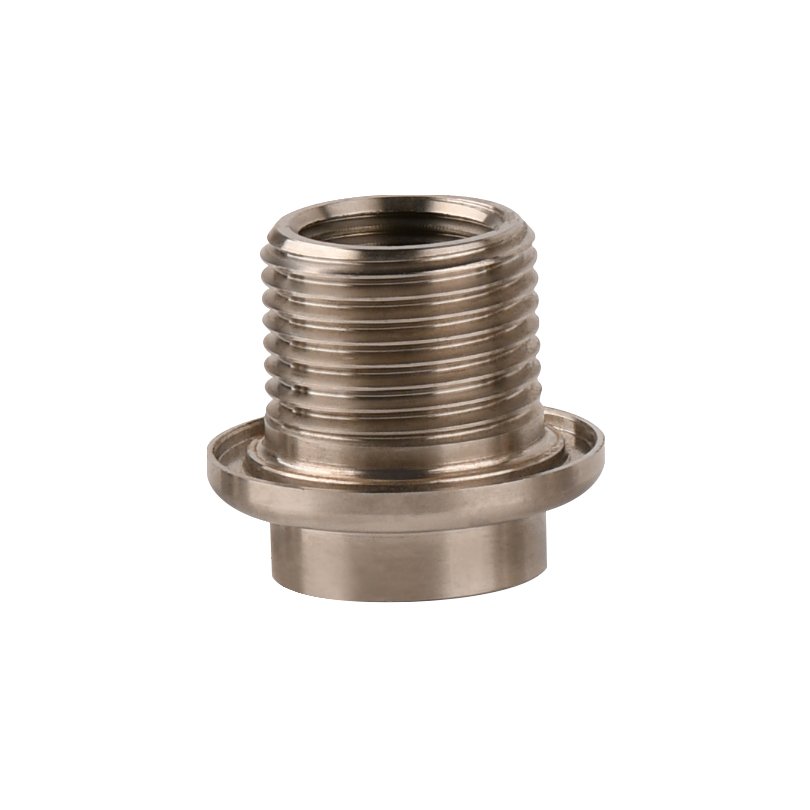
SS 316L CNC Machined Stainless Steel Fittings Supplier
View details →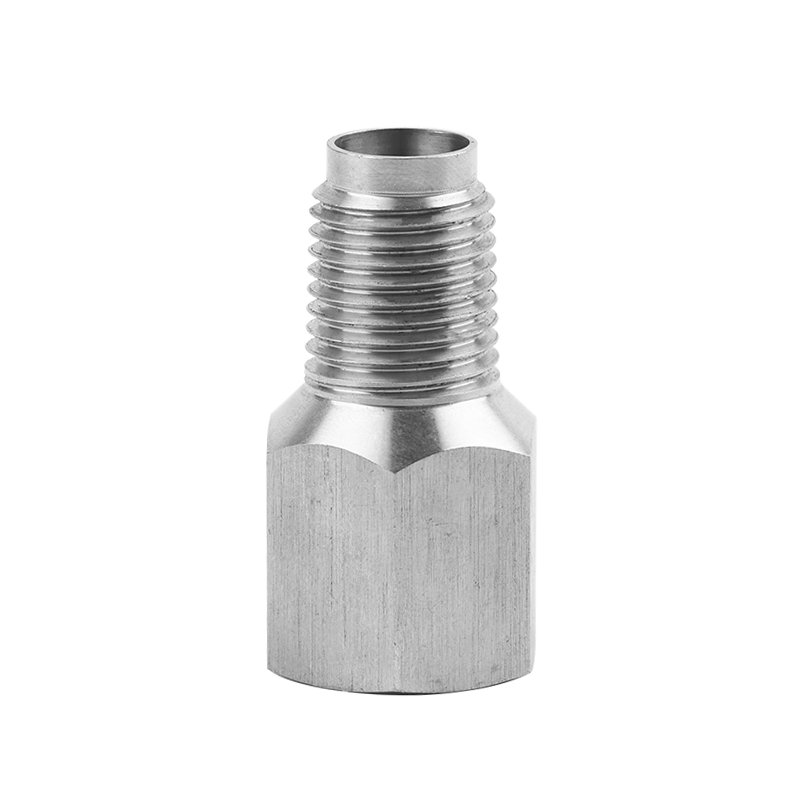
CNC machining services for NPT stainless pipe fittings
View details →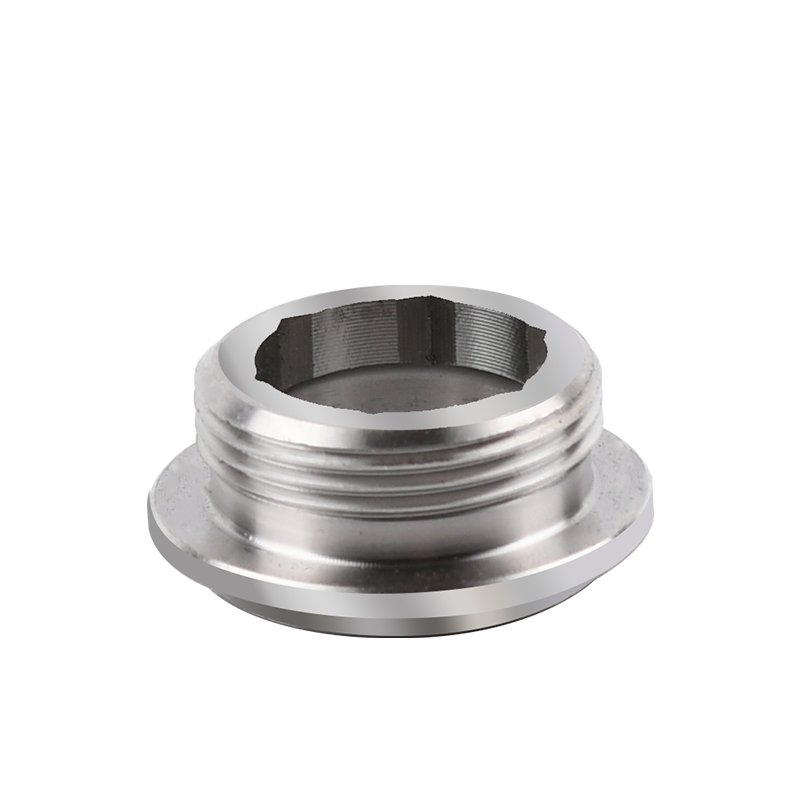
Custom 304 Stainless Steel CNC Machined Pipe Fitting
View details →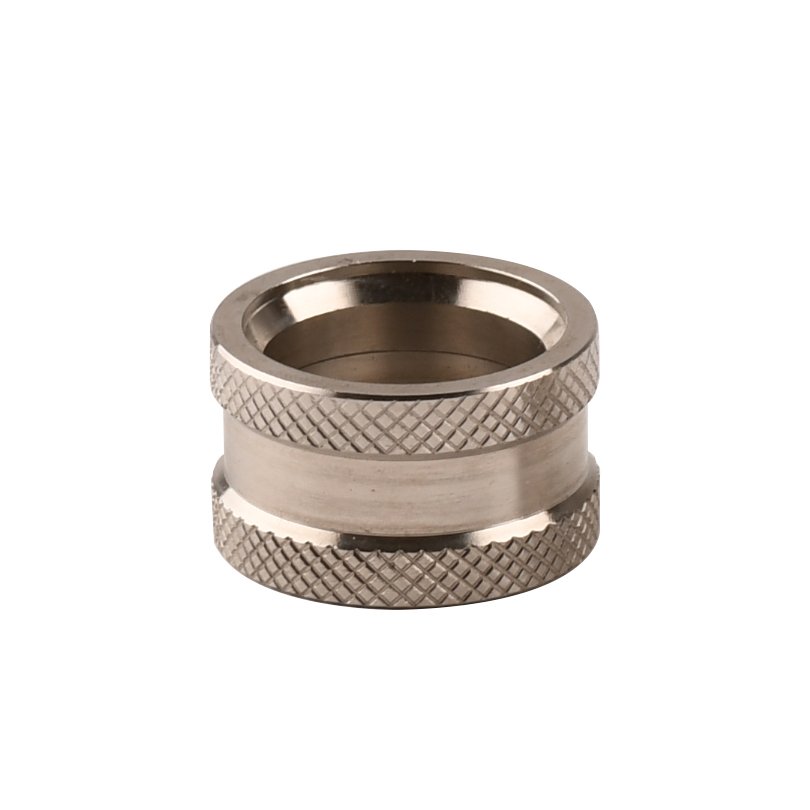
OEM Precision Custom CNC Parts and SS 304 Pipe Fittings
View details →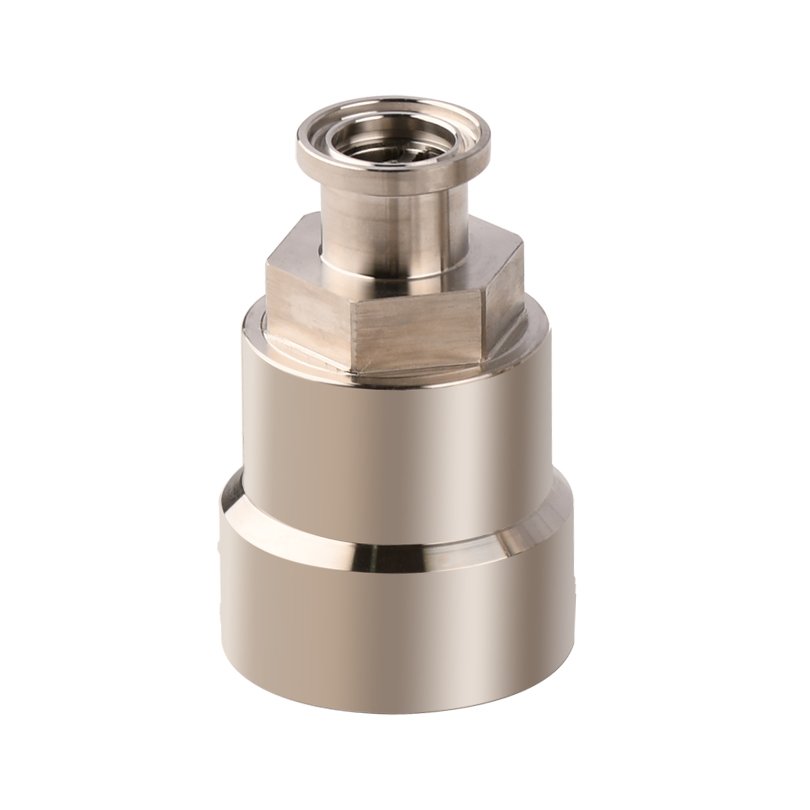
Custom cnc machining service for 316 ss fittings
View details →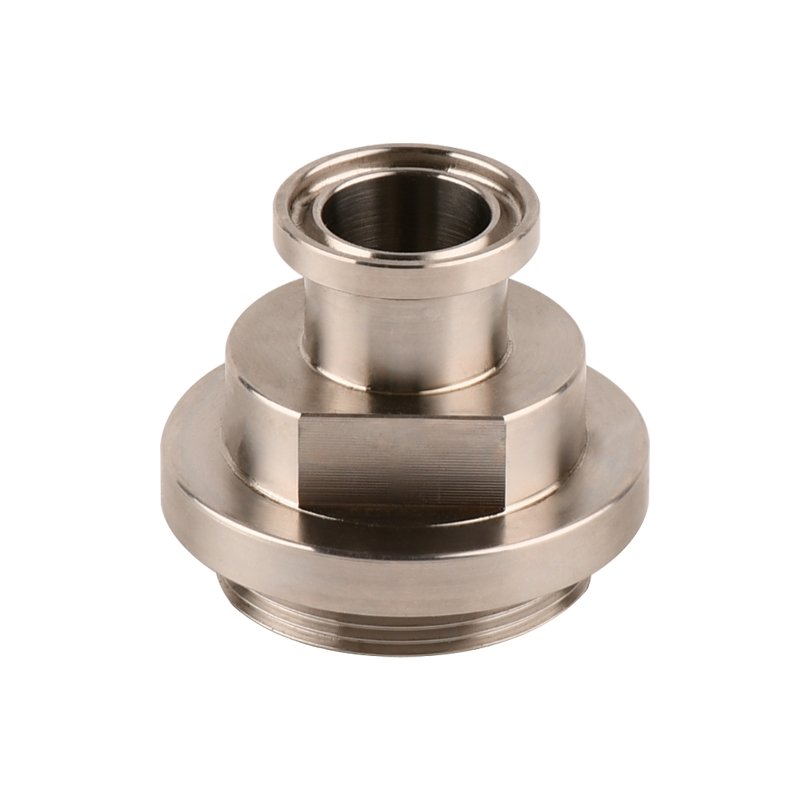
Stainless metal pipe fittings
View details →
Custom CNC Turned Parts
View details →Send an inquiry to our team
Tell us material, thread, quantity, and requirements. After submit, email drawings to info@sspipefitting.com if needed.
Investment Cast Stainless Steel Elbow Fittings | Hongqian