
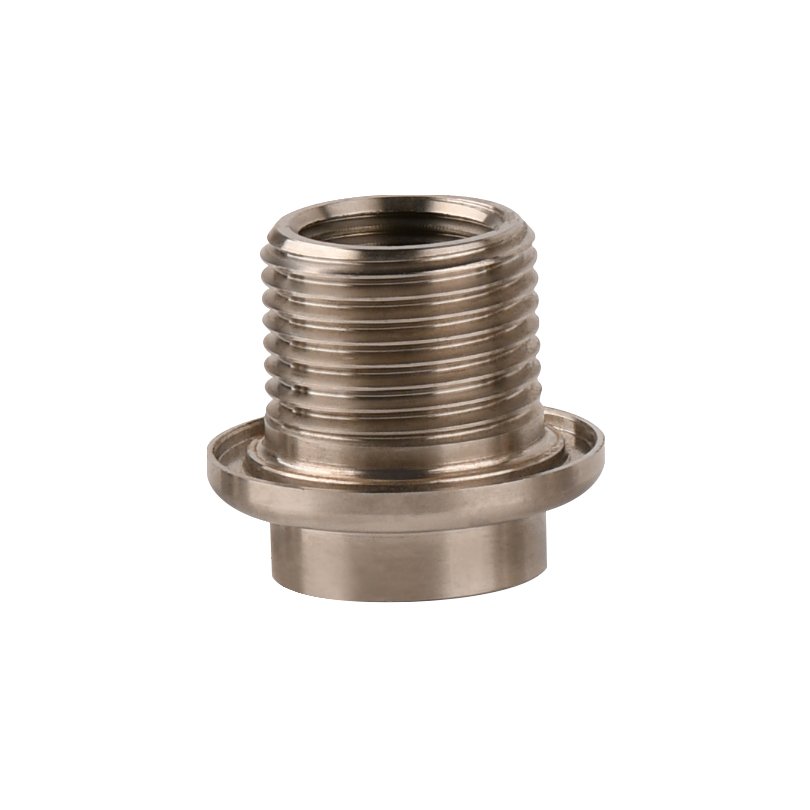
These stainless steel threaded pipe fittings are turned from 303 bar and tube stock: male and female adapters, reducers, nipples, plugs and caps, with threads cut to NPT, BSPP, BSPT, metric or UNF. Everything in the family is machined from wrought stock in-house — no castings, and no plating to account for afterwards.
303 is the free-machining austenitic stainless, and it is the grade this family is turned from for a practical reason: on a part whose visible faces are threads and turned surfaces, it buys cutting speed, tool life and a clean finish that 304 does not match at the same price. The sections below cover the range, the thread forms, and what 303 will and will not do.
The range of threaded pipe fittings on this page
Buyers searching for stainless steel threaded pipe fittings are usually after one of the rows below — a threaded adapter to land a line on an existing port, or a hose fitting for soft hose. Both are here, turned from the same stock on the same machines.
| Fitting | Sizes we run | End combination | Where it is used |
|---|---|---|---|
| Adapter, male × male | 1/8″–4″ | NPT, BSPP, BSPT or metric | Landing a line on an existing port |
| Adapter, male × female | 1/8″–2″ | NPT, BSPP or BSPT | Female port onto a male stud |
| Reducing adapter / bushing | 1/4″–2″ | Two thread sizes, stepped | Dropping a port down one size |
| Hex nipple and close nipple | 1/8″–2″ | Male × male | A short bridge between two female ports |
| Hex plug and cap | 1/8″–2″ | Thread only | Closing a port for test or shipping |
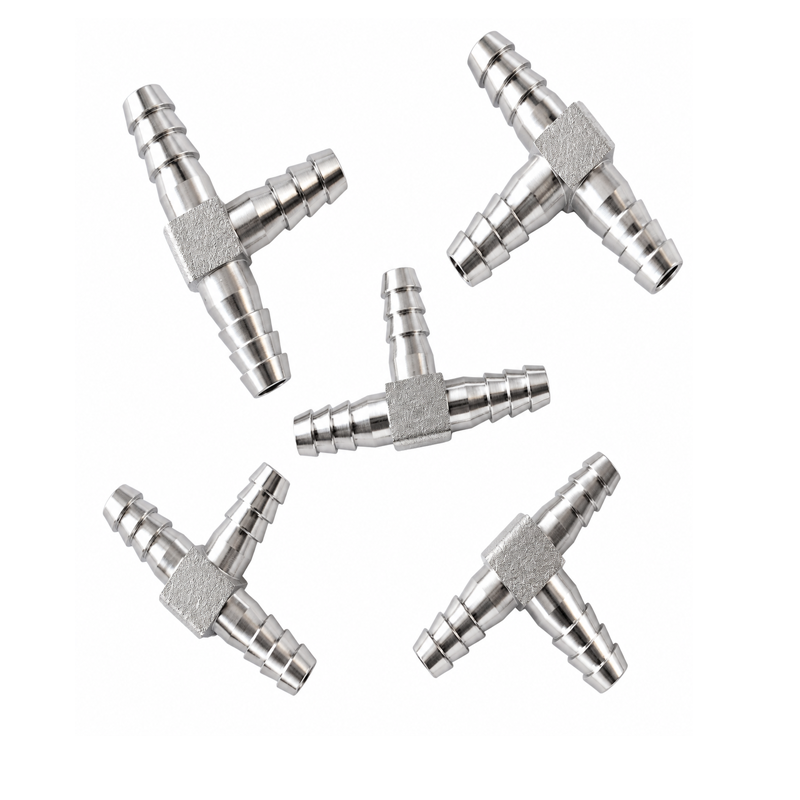
| Straight hose barb | 1/8″–2″ hose I.D. | Barb × male thread | The hose line: pumps, washdown, air and water |
Not on this page: butt-weld and socket-weld fittings, sanitary clamp ends and flanged adaptors. Different standards, different inspection, different pages.
Thread forms we cut
| Form | Standard | Note |
|---|---|---|
| NPT | ASME B1.20.1 | Taper. Seals with tape or paste; gauged L1/L3. |
| NPTF | ASME B1.20.7 | Dry-seal. Interference fit on flanks, no sealant. |
| BSPP (G) | ISO 228 | Parallel. Seals on a face or bonded washer, not on the thread. |
| BSPT (R) | ISO 7 | Taper, mates with Rp female. |
| Metric M | DIN 13 | Fastener thread; seals on an O-ring or bonded seal. |
| UNF | ASME B1.1 | Fine pitch, instrument and hydraulic work. |
The one rule that matters: the fitting thread and the port thread have to be the same form. Several of these look close enough to start together, and none of them interchange — a mixed pair may assemble two turns and never seal. Tell us the form on the drawing and we cut to it; a photo of the port is not enough.
Threads are gauged after the last cut: 2A/2B or L1 gauges on the inch forms, 6g/6H on metric. On assembly, a nickel or molybdenum-disulphide anti-seize paste on the male thread is worth insisting on — stainless-on-stainless threads seize more readily than they leak, and the paste removes most of that risk.
303: why this family is turned from it
303 is 304 with sulphur added (0.15–0.35 %). The sulphur forms soft inclusions in the matrix that break chips and lubricate the cut, so the grade machines faster, holds a sharper thread and leaves a better surface than 304 does. On a fitting whose outside faces are thread and turned surface, that difference is the product: cleaner crests, less burr to remove, a better-looking part, and a lower price because the cycle is shorter.
The price of that is two properties you should know before the drawing is fixed.
303 does not weld. The sulphur that helps the cut causes hot cracking in the weld pool, so a 303 fitting must not be designed into a welded assembly. If the part is going to be welded to anything, it should be 304 or 316L and we should quote it that way.
303 corrodes a little earlier than 304. The sulphide inclusions that break the chips are also where pitting starts. Indoors, in general atmosphere, on water and oil lines, this is not a practical difference. Near salt, on coastal equipment or in chloride-bearing media, it is — there the fitting should be 316.
| Grade | Machining | Corrosion | Use it when |
|---|---|---|---|
| 303 | Best of the three: fast cuts, sharp threads, clean finish | Slightly below 304; pits first at inclusions | Indoor equipment, machine ports, no welding |
| 304 | Gummy, slower, more burr | Standard austenitic; weldable | Welded assemblies, food-adjacent, washdown |
| 316 | Like 304, slightly worse | Molybdenum buys chloride resistance | Coastal, chemical, marine-adjacent |
If the drawing says 303 and the service says salt, say so — the honest answer is a different grade, not a thicker part. Every lot ships with an EN 10204 type 3.1 certificate for the heat it was turned from, plus a dimensional report.
Bar and tube, turned in our own workshop
Parts with a wide straight bore start from tube, because the bore is bought rather than drilled; parts with small bores or solid ends start from bar. That choice is made on the quote, and it is one of the larger levers on the piece price.
Turning runs on more than 60 CNC automatic lathes on gantry-robot loading lines, with live tooling for milling, drilling and tapping in the same setup. Cutting and sawing, presses, tapping machines, grinding, laser marking and ultrasonic cleaning are in the same workshop, so a batch does not travel between subcontractors between operations. Inspection uses an optical projector, a hardness tester and a roughness gauge, and operators record dimensions at a fixed interval through the shift. Each lot ships with a dimensional report and the material certificate for its heat — one factory, one set of records.
Minimum order and lead time
1,000 pieces per size is the minimum, and there is no die charge, because every part starts as bar or tube. A repeat size runs 15–20 working days; a first article with new programming and gauging is about 4–5 weeks.
A quote needs five lines: the grade, the thread form and size, the bore, the overall length, and the surface finish requirement. Unspecified tolerances follow ISO 2768-m. Send those and the price is a price; send a photo and it is a guess.
Why is this family turned from 303 instead of 304?
Because 303 is 304 with sulphur added (0.15–0.35 %), and the sulphur breaks chips and lubricates the cut. The grade machines faster, holds a sharper thread and leaves a cleaner surface than 304 does — and on a fitting whose visible faces are thread and turned surface, that difference is the product: cleaner crests, less burr, a better-looking part at a lower price. The trade-offs are corrosion resistance slightly below 304 and no weldability, which is why the service environment decides the grade, not habit.
Can 303 fittings be welded?
No. The same sulphur that improves machinability causes hot cracking in the weld pool, so a 303 fitting must not be designed into a welded assembly. If the part is to be welded to anything, it should be 304 or 316L — say so on the enquiry and we quote the drawing in that grade instead of selling a part that will crack at the joint.
Is 303 corrosion resistant enough for outdoor use?
Depends on the outdoor. The sulphide inclusions that make 303 machine well are also where pitting starts, so it sits slightly below 304 in corrosion resistance. In general atmosphere, on water and oil lines, indoors or under cover, that is not a practical difference. Near the sea, on de-icing salt, or in chloride-bearing media, it is — there the fitting should be 316, whose molybdenum is what buys the pitting resistance.
Can you supply 304 or 316 instead of 303?
Yes, on the same tooling and the same programme. Be aware of what changes: 304 and 316 machine slower and gummier, so the piece price is higher and the threads carry a little more burr. If the service justifies it — welding, salt, chemicals — that is the right trade. If not, 303 is the honest answer and the cheaper one.
Can NPT and BSP threads be used together?
No. Several sizes look close enough to start together — 1/2" NPT and 1/2" BSP both run 14 threads per inch — but the flank angles differ (60° vs 55°) and the crests are not the same, so a mixed pair assembles two turns and never seals. The fitting thread and the port thread have to be the same form. Tell us which one the drawing is and we cut to it.
What is the minimum order and the lead time?
2000 pieces per size, with no die charge — every part starts as bar or tube. A repeat size runs 15–20 working days; a first article with new programming and gauging takes about 4–5 weeks.
Related products
Stainless Steel Precision Turned Components
View details →
SS 316L CNC Machined Stainless Steel Fittings Supplier
View details →
CNC machining services for NPT stainless pipe fittings
View details →
Custom 304 Stainless Steel CNC Machined Pipe Fitting
View details →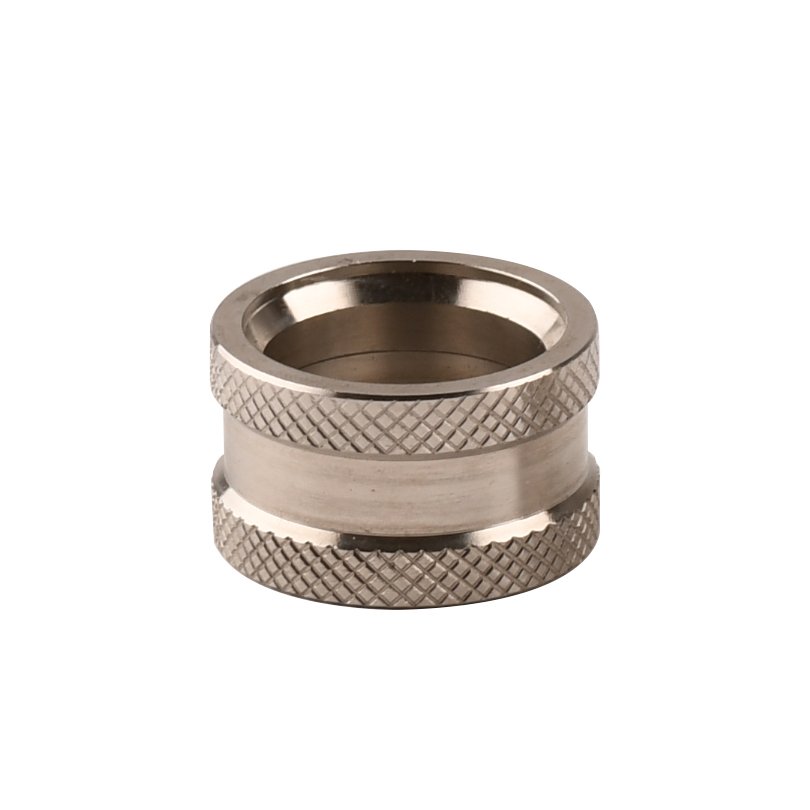
OEM Precision Custom CNC Parts and SS 304 Pipe Fittings
View details →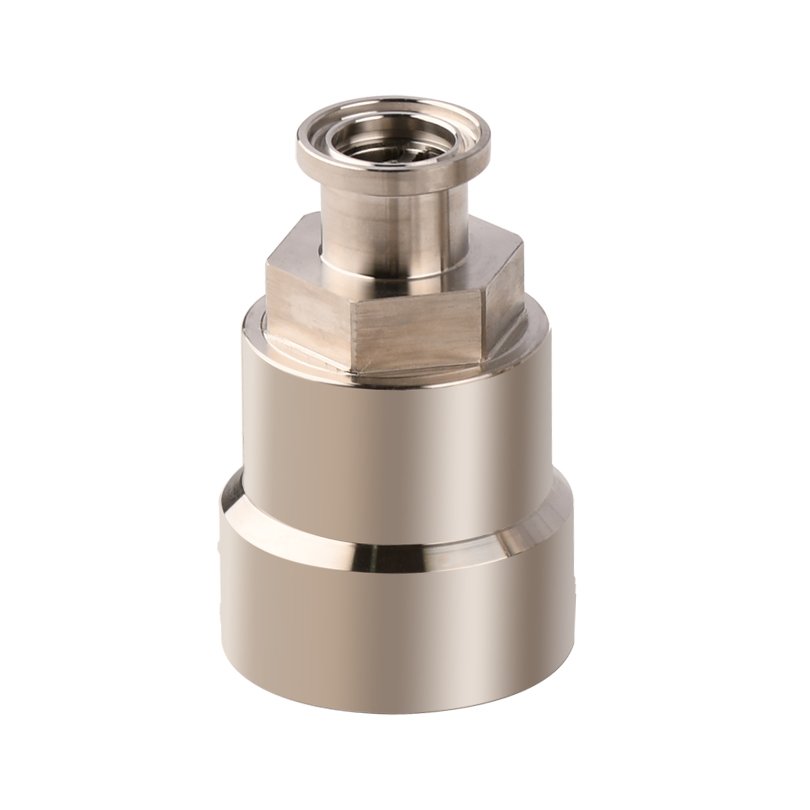
Custom cnc machining service for 316 ss fittings
View details →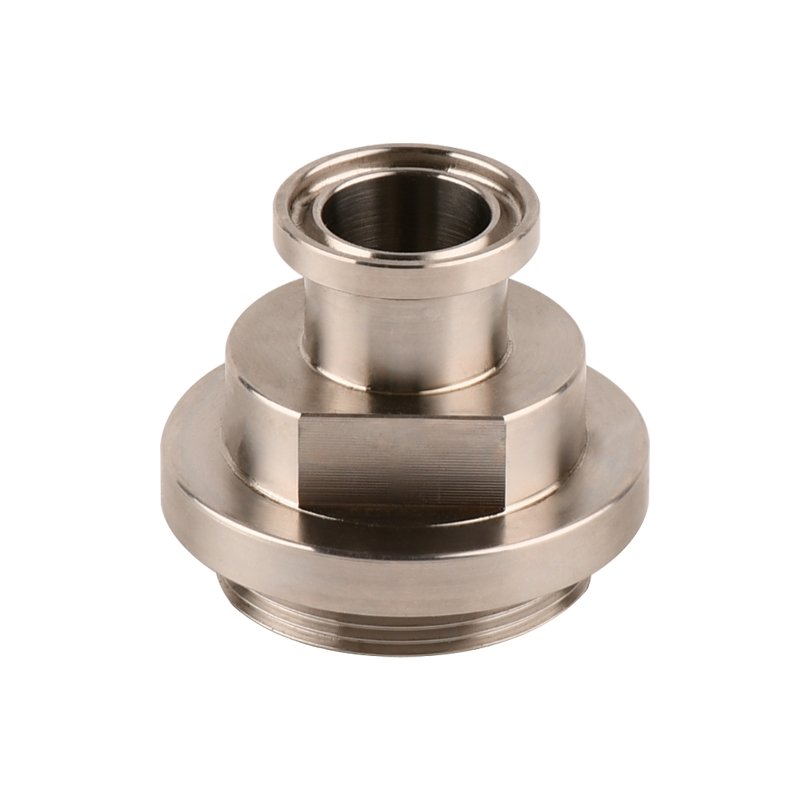
Stainless metal pipe fittings
View details →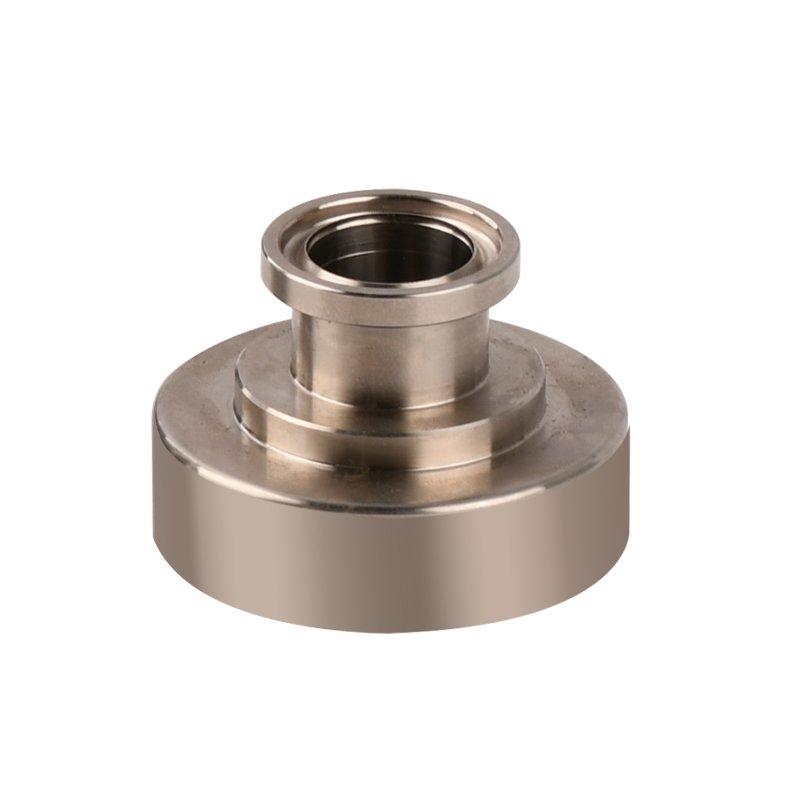
Custom CNC Turned Parts
View details →Send an inquiry to our team
Tell us material, thread, quantity, and requirements. After submit, email drawings to info@sspipefitting.com if needed.
303 stainless steel threaded pipe fittings,threaded pipe fittings stainless steel