
An ss fitting costs more to machine and less to buy than a brass one. Which way that ends up depends on one thing more than any other: how heavy the part is. Copper is running at about 60,000–70,000 CNY a tonne (USD 8,500–9,900). Stainless bar is around 18,000 CNY (USD 2,500). Buyers with brass drawings keep asking us the same question. Should this part become an ss fitting, or does it only look good on paper?
We are a fitting factory in Taizhou, Zhejiang, not a trading house. Brass and 201, 303, 304 and 316 stainless all run on the same turning line here. We quote the same part number in both metals often enough that we know the answer. It comes down to three things: how heavy the part is, what it has to survive, and what the water will do to it over ten years. None of that is hard. Skip one of the three, and the conversion costs you money instead of saving it.
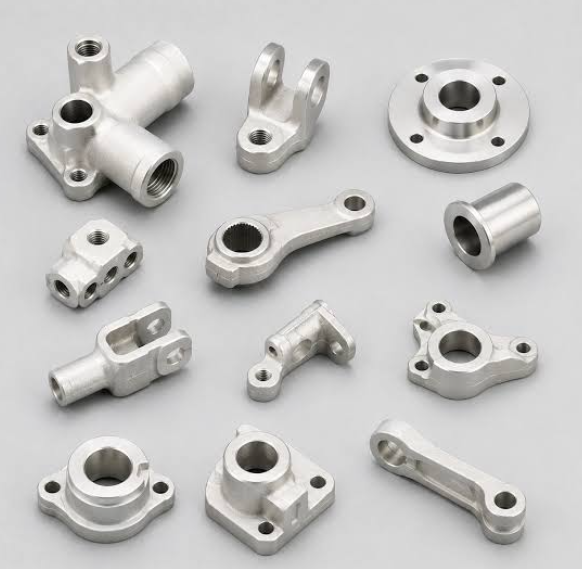
Factor one: the weight test — when an ss fitting switch pays
A fitting has two costs: the blank and the machine time. You buy the blank by weight. You pay the machine time by the hour, and stainless eats more hours than brass. 304 cuts at about half the speed of free-cutting brass. In our quotes the stainless machining cost runs three to four times the brass number — sometimes more, on thin walls and small holes. So which cost is bigger? That is the whole question.
The blank side is easy to work out. Brass is about 65 CNY a kilogram today, stainless about 18. Stainless is also about 8% lighter for the same shape (7.9 against 8.5 g/cm³), so the blank weighs less before you cut anything:
| Same fitting body | Brass, scrap credited | Stainless, scrap credited |
|---|---|---|
| 15 g part (light nipple, insert) | About 0.99 CNY (20 g bar) | About 0.33 CNY (18.6 g bar) |
| 50 g part | About 3.28 CNY (67 g bar) | About 1.12 CNY (62 g bar) |
| 80 g part (body, bulkhead) | About 5.25 CNY (107 g bar) | About 1.78 CNY (99 g bar) |
Both columns already have the scrap taken off, and that is where brass gets a credit stainless does not. You buy bar by blank weight, not by finished weight. The 60 g body in the case below comes off an 80 g bar, and the 20 g that leaves as turnings goes back as scrap. Scrap copper sells for about 2,000 CNY a tonne under bar — 63,000 against 65,000 — and that money comes off the material before we build a price.
| Material in a 60 g brass body | Calculation | CNY |
|---|---|---|
| Bar bought | 80 g × 65 CNY/kg | 5.20 |
| Turnings sold back | 20 g × 63 CNY/kg | −1.26 |
| Material in the price | 3.94 |
Getting that 1.26 back is the difference between a quote that wins and a quote that is wrong. Price the body on the full 5.20, and the customer is paying for metal you already sold. The 2,000 CNY gap is the only real loss in the loop. It is 0.04 CNY on this part, more on a heavier cut, and it grows with every gram you take off. We credit nothing for stainless turnings. Mixed 304 swarf sells for a fraction of bar, and we would rather show that column against the conversion than make it look better.
On a 15 g part the blank saves under one yuan. The extra machine time then eats that several times over. A light part has no business changing material.
On an 80 g part it is about three and a half yuan each. On 10,000 pieces that is near 35,000 CNY, before you count a single hour of machine time. On the work we quote, the switch starts to pay at about 50 g. Below that we tell you so and leave the part in brass. Above it, the blank saving pays for the conversion on its own. The exact point moves with cycle time, which is why a quote in both metals beats a rule of thumb.
The case behind the rule: a 60 g HPB57-3 part that became an ss fitting
One customer bought a 60 g body in HPB57-3 for years. That is a leaded free-cutting brass: 57% copper, 2.5–3.5% lead. It came off an 80 g bar, got nickel-plated and shipped. He asked if 304 could come in under the plated brass price. It could. But not for the reason he thought.
The blank went from 3.94 CNY to 1.33. The plating went with it: no nickel, no barrel minimum, no three days of plating lead time. The lead went too. HPB57-3 carries 2.5–3.5% of it, 304 carries none, and that is a quiet bonus on anything touching drinking water. Bare stainless became the finish. We agreed a roughness his line could live with.
The other side of the ledger is where most conversions die. Brass ran 40 seconds a piece. 304 ran 90. At 300 CNY an operator-day, that is 0.42 CNY of labour against 0.94. Tool life dropped to one change every two hours, about 80 pieces, which adds 0.12. Stainless chips come off stringy and need handling brass swarf never did. That is another 0.08.
| Per piece | Brass, plated | 304, bare |
|---|---|---|
| Blank, scrap credited | 3.94 CNY (80 g bar) | 1.33 CNY (74 g bar) |
| Machining labour, 40 s against 90 s | 0.42 | 0.94 |
| Tool change, one per two hours | — | 0.12 |
| Chip handling | — | 0.08 |
| Nickel plating | 0.30 | — |
| Cost before margin | 4.66 CNY | 2.47 CNY |
It still lands at 2.47 against 4.66. That is about 2.2 CNY a piece, a little over half the plated brass cost, before we talk price. Two things came up after the first batch. The bare finish looked different from plated brass on his line. And one tool chipped on an interrupted cut until we re-sequenced the program. Both were fixed. Both are now quoted up front instead of found in production.
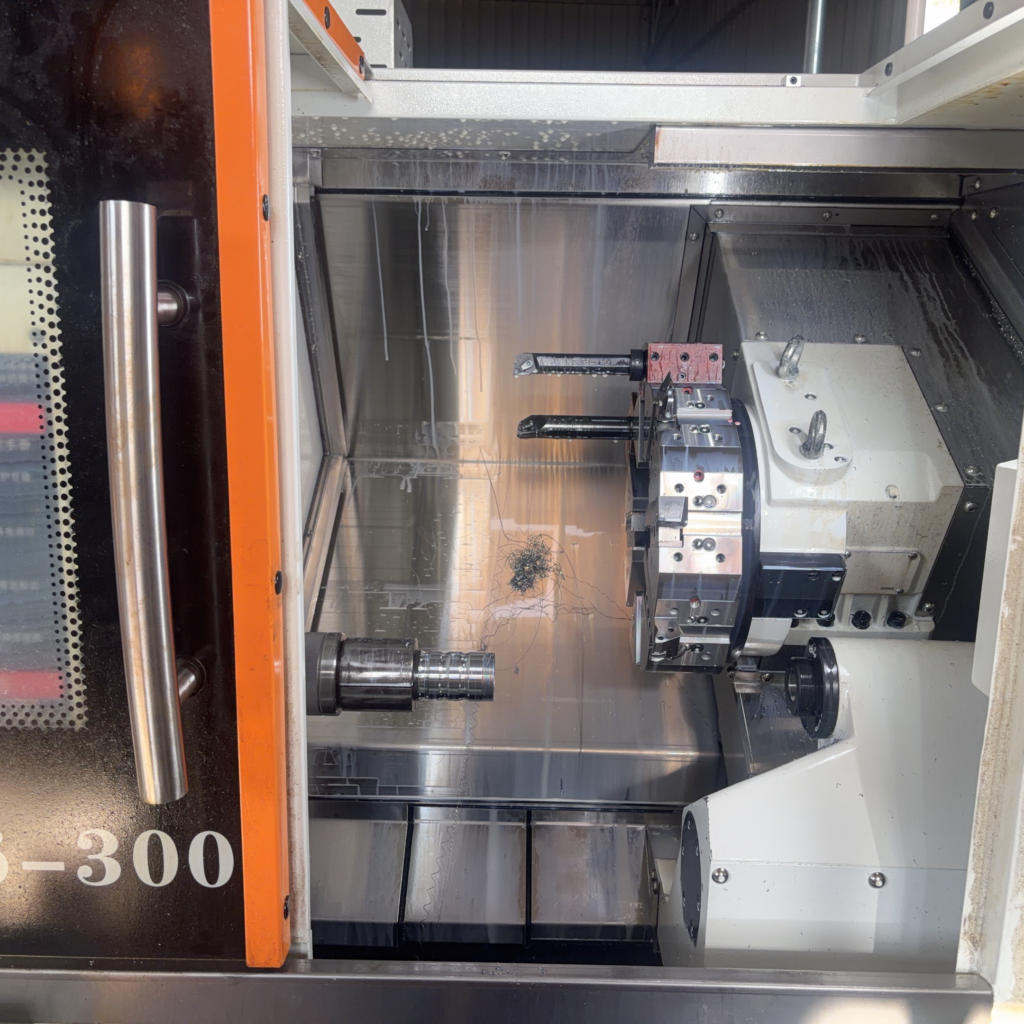
Factor two: performance, and the one property brass has that stainless does not
On strength, the brass vs stainless steel fittings comparison is not close. Brass runs roughly 200–550 MPa in tension. Common stainless grades run 500–1,200 MPa. The harder metal holds more pressure and a wider temperature window. Brass fittings are usually rated to moderate pressure and about −54 to 204 °C. Stainless is specified from cryogenic service up to several hundred degrees. If a drawing moves to an ss fitting because the duty went up — more pressure, hotter media, more vibration — the harder metal is not the risk. It is the upgrade.
Two assembly points matter before anyone signs the change. First, stainless threads gall. The metal seizes on itself when you tighten it, in a way soft brass never does. A conversion brings an anti-seize or a thread-quality requirement with it. Our threads are cut and gauge-checked to keep galling off your line. Second, joining. Brass brazes and solders easily, and many brass assemblies depend on that. Stainless is a different job. 303, the free-cutting grade, cannot be welded without hot-cracking risk. 304 and 316 weld cleanly, but welding is a process we subcontract rather than run in-house. If the brass part gets brazed into a bigger assembly today, the conversion has to budget for a different joint, not just a different blank.
Factor three: what the water does to an ss fitting over ten years
This is the part buyers usually get backwards. They assume brass corrodes and stainless does not. Both need conditions on them.
Brass fails by dezincification. In hot, chlorinated, slightly acidic or stagnant water, the zinc leaches out of the alloy. What is left is a porous copper skeleton. It weeps at the joint and can burst under a pressure spike. Standard free-cutting brass with more than about 15% zinc is the vulnerable family, and the risk climbs fast above 60 °C. The industry answer is dezincification-resistant (DZR) brass, with arsenic or tin added. That is a real improvement in aggressive drinking water, but it is still brass. The zinc is still there, just attacked more slowly. ISO 6509 is the test that separates the two families. It measures how deep the zinc has leached under controlled conditions. DZR grades pass. Standard C36000 does not.
Safe brass is not free. DZR costs more than the standard alloy, and that narrows the price gap the conversion was chasing. It is also the fair comparison. If you convert to escape dezincification, you are really choosing between DZR brass and stainless, not between C36000 and 304.
Stainless fails a different way. It protects itself with a chromium-oxide layer a few atoms thick. Oxygen rebuilds it, so a scratch heals. That is why a scratch on an ss fitting stays cosmetic, while a scratch on brass can be where the corrosion starts. The layer has one known enemy: chloride. In chloride water above about 50–60 °C, chloride ions get through it. Under tensile stress they crack the metal from the outside, where you cannot see it. 304 has no molybdenum and suffers first. 316 adds 2–3% molybdenum, which pushes its pitting resistance well above 304. That is why 316 is the default for marine, coastal and washdown duty. Rough or creviced surfaces collect chloride, which is why finish matters on a converted part.
| Environment | What attacks the fitting | The material answer |
|---|---|---|
| Neutral cold water | Very little. Both metals last decades | Stay in brass. It is cheaper to machine |
| Hot, chlorinated water | Dezincification of standard brass above ~60 °C | DZR brass or 304/316. The weight test decides which is cheaper |
| Coastal, marine, washdown | Chloride attack on any zinc-bearing alloy | 316, not 304. The molybdenum is what you are paying for |
| Hot chloride above 50–60 °C | Chloride stress-corrosion cracking of 304 | 316, a smoother finish, and the stress the part actually carries |
The short version: stainless resists corrosion better in almost every wet environment, but it is not immune, and the grade matters more than the word “stainless”. Convert a brass part to 304 because “stainless does not rust”, put it in a hot brine line, and you have traded one failure for another. On converted parts we default to 304 for general duty and 316 wherever chloride is in the picture. See our 316 fitting range for what that looks like as a product line.
What to send for a conversion quote
We quote a conversion from five facts. The first three decide the money. The last two decide the risk.
| What to send | Why it is on the list |
|---|---|
| The drawing, with the brass alloy named | Free-cutting brass (C36000 family) cuts faster than any stainless. What we quote back — 303 for pure turning, 304 or 316 where corrosion or joining matters — follows from what the brass was doing |
| Finished part weight | The one number that decides whether the blank saving can carry the machining cost. Around 50 g is where it starts to pay in our quotes |
| Annual quantity | The saving is per piece. Four yuan is nothing on 300 pieces a year, and worth a visit on 10,000. Our turning line quotes from 1,000 pieces |
| The media, its temperature and its chemistry | This picks 304 or 316. It also flags chloride cracking and dezincification before they become field failures |
| How the part joins the next part | A brazed brass assembly does not convert by itself. Threads, welds and sealing faces each get a note in the quote |
Three conversions we would talk you out of
Under 50 g. The blank saves cents and the machining costs three to four times more. Brass is the cheaper answer here. Saying so is why the same factory quotes both metals.
Into 303 for a part that gets welded. 303 is the free-cutting stainless and the obvious choice for a pure turned ss fitting. It is not a welding grade. If the brass part was brazed, or the new one needs welding, you go to 304 or 316, and the machining cost goes up with it. That feeds straight back into factor one.
Into 304 for a hot chloride line. This one saves money for a year and cracks in the third. On a 316 fitting, molybdenum is not an optional extra. It is the part of the price that answers the chloride.
How we quote a brass-to-ss fitting conversion
Send the drawing and the weight. We quote the part in brass and in stainless side by side, with the machining difference shown, not buried in one number. If the conversion does not pay, the quote says so. We have a brass fitting line of our own worth protecting, so talking you out of a light conversion costs us nothing. A supplier that runs only one metal has a reason to say yes to every conversion. We run both, so we are allowed to say no. Where it does pay, the saving is real. Copper has not got cheaper in two years. A heavy part moving from 65 CNY a kilogram to 18 is the kind of arithmetic that survives a procurement review. Our turning, grades and capacity are on the machining services page, and most of these conversions land in our custom stainless fittings line. Brass or ss fitting, both quotes come out of the same workshop, and the cheaper honest one is the one you should get.
Frequently asked questions
01Q1. At what weight does converting a brass fitting to stainless steel save money?
A: In our quotes the line sits around 50 g of finished part weight. A brass blank costs about 65 CNY per kilogram against about 18 CNY for stainless, and the same shape in stainless weighs roughly 8% less, so an 80 g part saves nearly 4 CNY per piece in blank cost alone. Below that line the machining premium — stainless runs three to four times brass — wipes the saving out, and we say so in the quote.
02Q2. Why is machining a stainless steel fitting so much more expensive than brass?
A: Free-cutting brass (the C36000 family) is the industry benchmark at 100% machinability; grade 304 machines at roughly half that speed, with higher tool wear on every pass. On thin walls and small bores the premium climbs further, which is why a light part should stay in brass even while copper prices are high.
03Q3. Will a stainless steel fitting rust like cheap steel?
A: No. Stainless is protected by a chromium-oxide layer a few atoms thick that re-forms wherever free oxygen is present — a scratch heals itself. Its real enemy is chloride: in chloride-bearing water above roughly 50–60 °C the layer can be breached and grade 304 can crack under stress. Grade 316 adds molybdenum precisely for that environment.
04Q4. What is dezincification and should it stop me buying brass fittings?
A: Dezincification is the selective leaching of zinc out of brass in hot, chlorinated or stagnant water, leaving a porous copper skeleton that weeps and can burst. It attacks standard free-machining brass with more than about 15% zinc, sharply above 60 °C. In neutral cold water brass lasts decades; in hot or chlorinated water, either specify DZR brass or move the part to stainless.
05Q5. Should I convert to 304 or 316?
A: 304 for general duty, 316 wherever chlorides are in the picture — coastal air, washdown, hot chlorinated water. The molybdenum in 316 is what answers the chloride; converting a hot chloride line from brass to 304 trades one failure mode for another
06Q6. Can the converted fitting still be brazed into our assembly?
A: That is the check most conversions miss. Brass brazes easily; stainless does not behave the same way — grade 303, the free-machining choice for pure turning, cannot be welded without hot-cracking risk, while 304 and 316 weld cleanly. If the brass part is currently brazed into a larger assembly, the joint method has to be re-decided, and it feeds back into the economics.
07Q7. What do you need to quote the same part in both brass and stainless?
A: The drawing with the brass alloy named, the finished part weight, the annual quantity, the media with its temperature and chemistry, and how the part joins the next part. We quote both metals side by side with the machining premium shown separately, and if the conversion does not pay we say so.